
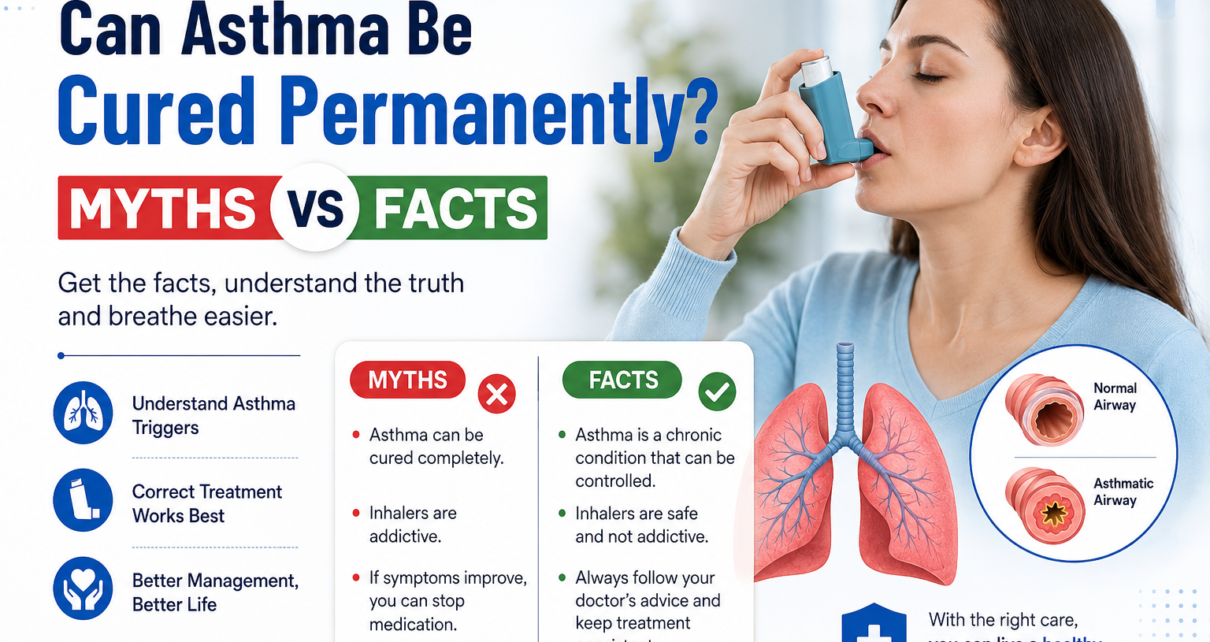
Asthma is one of the most common chronic respiratory diseases, affecting millions of people worldwide. Despite medical advancements, many people still believe that asthma can be permanently cured through home remedies, herbal medicines, or a single treatment. These misconceptions often delay proper medical care and increase the risk of severe asthma attacks.
In this article, we’ll separate myths from facts and explain whether asthma can be cured permanently, how it can be managed effectively, and when you should consult a chest specialist.
What Is Asthma?
Asthma is a long-term condition in which the airways become inflamed and narrowed, making it difficult to breathe. The severity of asthma varies from person to person. Some individuals experience occasional symptoms, while others may have frequent attacks that interfere with daily life.
Common symptoms include:
- Wheezing (a whistling sound while breathing)
- Shortness of breath
- Persistent coughing, especially at night or early morning
- Chest tightness
- Difficulty breathing during exercise or after exposure to allergens
Asthma symptoms often come and go and may worsen when exposed to triggers such as dust, pollen, smoke, pollution, pet dander, cold air, or respiratory infections.
Can Asthma Be Cured Permanently?
The simple answer is No.
Currently, there is no permanent cure for asthma. However, modern medical treatments can control asthma so effectively that many people live completely normal and active lives without frequent symptoms.
The goal of asthma treatment is to:
- Prevent asthma attacks
- Reduce airway inflammation
- Improve breathing
- Allow normal physical activity
- Minimize emergency hospital visits
With the right treatment plan, many patients remain symptom-free for months or even years.
Myths vs Facts About Asthma
Myth 1: Asthma Can Be Permanently Cured
Fact:
There is no scientifically proven permanent cure for asthma. It is a chronic disease that requires ongoing management. Many patients experience long symptom-free periods, but stopping medications without medical advice may cause symptoms to return.
Myth 2: Inhalers Are Addictive
Fact:
This is one of the biggest myths.
Asthma inhalers are not addictive. They deliver medicine directly to the lungs, making them one of the safest and most effective treatments. Using an inhaler correctly can significantly reduce asthma attacks and improve quality of life.
Myth 3: If Symptoms Improve, You Can Stop Medicines
Fact:
Asthma symptoms often improve because the medicines are working. Suddenly stopping treatment without consulting your doctor can increase inflammation inside the airways and may lead to severe asthma attacks.
Always follow your doctor’s advice before changing or stopping medication.
Myth 4: Only Children Get Asthma
Fact:
Asthma can develop at any age. While many children are diagnosed with asthma, adults can also develop the condition due to allergies, environmental exposure, respiratory infections, or occupational hazards.
Myth 5: People with Asthma Should Avoid Exercise
Fact:
Regular physical activity is beneficial for most asthma patients when their condition is well controlled.
Many professional athletes successfully compete with asthma. Your doctor may recommend using a reliever inhaler before exercise if exercise-induced asthma is present.
What Triggers Asthma?
Understanding and avoiding triggers is an important part of asthma management.
Common asthma triggers include:
- Dust mites
- Air pollution
- Cigarette smoke
- Pollen
- Pet hair
- Mold
- Strong perfumes
- Cold weather
- Viral infections
- Stress
- Exercise (in some individuals)
Identifying your personal triggers can help reduce flare-ups.
How Is Asthma Treated?
Although asthma cannot be permanently cured, it can usually be controlled with the right combination of treatment and lifestyle changes.
Treatment options may include:
Controller Medicines
These reduce inflammation in the airways and help prevent symptoms over time.
Rescue Inhalers
These provide quick relief during an asthma attack by relaxing the airway muscles.
Allergy Management
If allergies trigger asthma, your doctor may recommend allergy testing and specific treatments.
Lifestyle Changes
- Avoid smoking and secondhand smoke.
- Keep your home clean and dust-free.
- Use air purifiers if recommended.
- Exercise regularly under medical guidance.
- Maintain a healthy body weight.
- Take prescribed medications consistently.
Can Children Outgrow Asthma?
Some children experience fewer asthma symptoms as they grow older. However, this does not necessarily mean the disease has been permanently cured.
Symptoms may return later in adulthood, especially after respiratory infections or exposure to allergens.
Regular follow-up with a healthcare provider remains important.
When Should You See a Chest Specialist?
Consult a chest specialist if you experience:
- Frequent wheezing
- Persistent cough lasting more than three weeks
- Breathlessness during daily activities
- Nighttime coughing
- Chest tightness
- Repeated asthma attacks
- Poor response to current asthma medication
Early diagnosis and proper treatment can prevent complications and improve long-term lung health.
Tips to Keep Asthma Under Control
- Take medicines exactly as prescribed.
- Learn the correct inhaler technique.
- Avoid known triggers.
- Keep emergency medication available.
- Schedule regular follow-up appointments.
- Get vaccinated against influenza if advised.
- Monitor symptoms using an asthma action plan.
Frequently Asked Questions (FAQs)
Can asthma disappear completely?
Asthma symptoms may remain absent for long periods, but the condition can return. It is generally considered a lifelong disease that requires ongoing monitoring.
Is asthma dangerous?
When properly treated, most people live normal lives. However, uncontrolled asthma can lead to severe attacks that require emergency medical care.
Can yoga cure asthma?
Yoga and breathing exercises may improve breathing efficiency and reduce stress, but they do not cure asthma. They should be used only as supportive measures alongside prescribed treatment.
Are home remedies enough?
No. Home remedies may provide temporary comfort but cannot replace evidence-based asthma treatment prescribed by a doctor.
Conclusion
Asthma cannot currently be cured permanently, but it can be effectively controlled with proper medical treatment, regular follow-up, and healthy lifestyle habits. Believing common myths or relying solely on unproven remedies can delay treatment and increase the risk of serious asthma attacks.
If you or a family member experiences recurrent cough, wheezing, or breathing difficulties, seek evaluation from a qualified chest specialist. Early diagnosis and a personalized treatment plan can help you breathe easier and enjoy a healthier, more active life.