
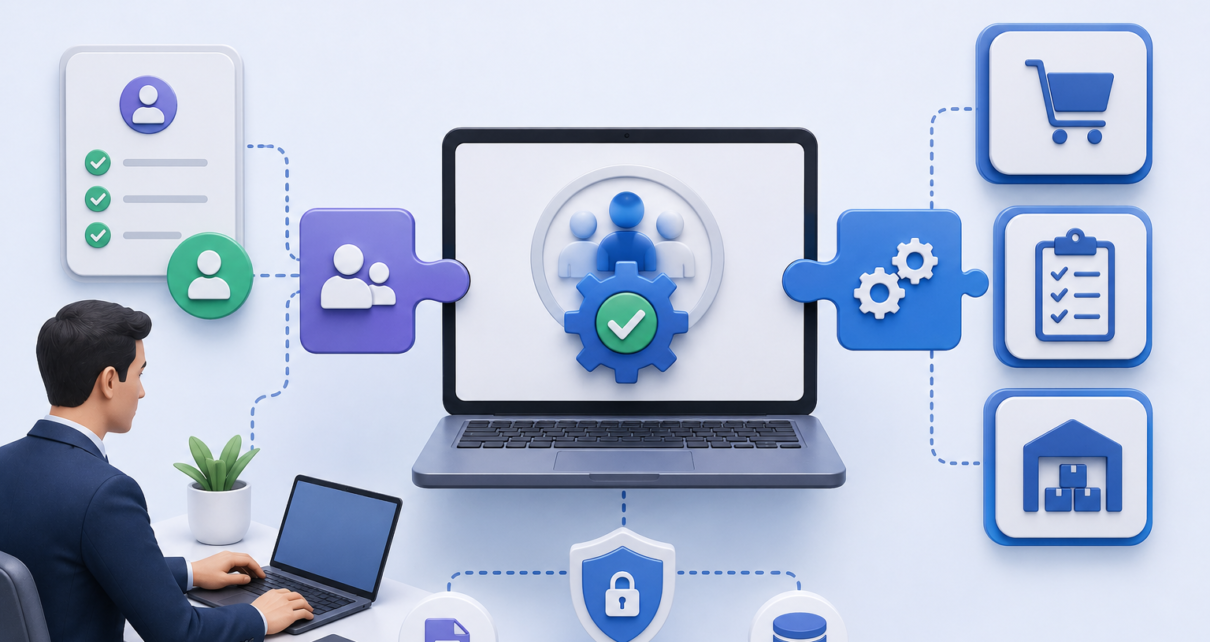
- A vendor onboarding solution centralizes and automates the entire vendor intake, risk scoring, and due diligence workflow — replacing fragmented manual processes with a structured, auditable system
- Automated screening integrations — covering sanctions lists, financial health, and cybersecurity posture — eliminate the blind spots that manual vetting consistently misses.
- Continuous post-onboarding monitoring is not optional; it is the only reliable way to detect emerging third-party risks between formal reassessment cycles.
- Cross-functional involvement from Legal, IT Security, Procurement, and Compliance is essential for building an assessment framework that is both operationally sound and regulatory-ready.
- The future of vendor onboarding is predictive — AI-driven risk intelligence, fourth-party mapping, and real-time ESG monitoring are rapidly becoming baseline expectations.
Introduction
Third-party risk is no longer a background concern managed quietly by procurement teams. It is a board-level priority. According to a 2023 Ponemon Institute report, 61% of organizations experienced a data breach caused by a third party, yet fewer than half had a formal, structured vendor risk program in place at the time of the incident.
The gap is not a lack of awareness. It is a failure of process. Most organizations still rely on email chains, shared spreadsheets, and manual document reviews to vet the vendors they trust with sensitive data, critical operations, and regulated workflows. That approach does not scale, does not provide defensible audit trails, and does not catch risk in time to act on it.
A vendor onboarding solution changes the equation. It transforms what is typically a slow, siloed, and inconsistent process into a standardized, automated, and continuously monitored risk management function. This article explains precisely how to use one — not in theory, but in practice — covering every stage from vendor intake to ongoing monitoring, along with the frameworks, features, and decisions that determine whether the implementation delivers real risk reduction or simply creates a more organized version of the same problem.
What Is a Vendor Onboarding Solution?
A vendor onboarding solution is a purpose-built digital platform that manages the end-to-end process of bringing a new vendor into an organization’s ecosystem — from initial intake and information gathering through risk assessment, compliance verification, contract execution, and post-approval monitoring.
At its core, it replaces the disconnected tools — email, spreadsheets, shared drives — that most organizations use with a unified, configurable system that enforces process consistency, captures a complete audit trail, and integrates with third-party screening databases, contract tools, and enterprise systems like ERP and procurement platforms.
It is important to distinguish a vendor onboarding solution from a broader Vendor Management System (VMS). A VMS typically handles contract lifecycle management, performance tracking, and spend analytics. A vendor onboarding solution focuses specifically on the front end of the vendor relationship: intake, risk scoring, due diligence, and approval. Modern enterprise platforms increasingly combine both, but the onboarding and risk assessment layer is the operationally critical foundation.
The components that define a capable vendor onboarding solution include a self-service vendor portal for data submission, a configurable risk scoring engine, a document management module with expiry tracking, workflow automation for multi-stakeholder approval routing, third-party screening integrations, and a centralized reporting and audit dashboard.
Why Vendor Risk Assessment and Due Diligence Cannot Be Left to Manual Processes
elect an ImageManual vendor vetting is not merely inefficient — it is structurally incapable of managing the volume, complexity, and regulatory requirements of modern third-party risk.
Consider the operational reality. A mid-sized enterprise may maintain relationships with hundreds or thousands of vendors simultaneously. Each vendor carries a unique combination of risk factors: data access levels, geographic exposure, financial stability, cybersecurity posture, and subcontractor dependencies. Tracking all of this through spreadsheets introduces version control failures, inconsistent scoring, missed document renewals, and invisible gaps that only surface during an incident or regulatory audit.
Regulatory pressure compounds the urgency. Frameworks including GDPR Article 28, HIPAA’s Business Associate Agreement requirements, NIST SP 800-161, ISO 27001 Annex A, and the EU’s Digital Operational Resilience Act (DORA) all impose explicit obligations on how organizations assess, document, and monitor the vendors they engage. Non-compliance carries financial penalties, operational restrictions, and reputational exposure that no spreadsheet can prevent.
A vendor onboarding solution addresses this structurally. It enforces process consistency across every vendor engagement, maintains a complete and searchable audit trail, and integrates regulatory requirements directly into the assessment workflow — making compliance an outcome of normal operations rather than a separate remediation effort.
How a Vendor Onboarding Solution Works: The End-to-End Process
A vendor onboarding solution works by digitizing and automating each stage of the vendor risk and due diligence lifecycle — from vendor invitation and data collection through risk scoring, screening, approval routing, and continuous monitoring — within a single configurable platform.
Stage 1: Vendor Invitation and Profile Creation
The process begins when a procurement or business owner initiates a vendor onboarding request within the platform. The system generates a unique vendor profile and sends an automated invitation to the vendor’s designated contact, granting them access to a self-service portal.
Within the portal, vendors complete their organizational profile — legal entity details, ownership structure, geographic footprint, and primary points of contact. This is the data foundation on which all subsequent risk assessment activities are built, which is why accuracy and completeness at this stage are operationally important.
The platform enforces mandatory field completion and can validate certain data inputs — such as tax identification numbers or registration identifiers — against external databases in real time, reducing the volume of errors that require manual correction later.
Stage 2: Risk-Based Questionnaire Distribution
Once the vendor profile is created, the platform assigns and distributes an intake questionnaire tailored to the vendor’s category and preliminary risk classification. A cloud infrastructure vendor receives a questionnaire heavily weighted toward cybersecurity controls and data handling. A logistics provider receives questions focused on geographic risk, business continuity, and insurance coverage. A financial services subcontractor triggers questions aligned to AML and regulatory compliance.
This tailoring is not cosmetic. It directly affects the quality of the risk data collected and reduces questionnaire fatigue — a known barrier to vendor response rates. Platforms that support conditional logic allow questions to adapt dynamically based on prior answers, ensuring vendors only encounter questions that are genuinely relevant to their profile.
Questionnaire frameworks built into leading vendor onboarding solutions typically align with SIG (Standardized Information Gathering), NIST SP 800-161, or ISO 27001 Annex A, giving organizations a recognized methodological foundation without requiring them to build assessment criteria from scratch.
Stage 3: Document Collection and Verification
Alongside the questionnaire, the platform requests supporting documentation — certificates of insurance, ISO or SOC 2 certifications, financial statements, data processing agreements, business continuity plans, and applicable regulatory licenses.
The document management module handles intake, version control, and expiry tracking automatically. When a vendor’s ISO 27001 certificate is approaching its renewal date, the system triggers an automated reminder — to both the vendor and the internal owner — weeks in advance. This eliminates the compliance lapse that occurs regularly in manual systems when no one notices that a critical certification has lapsed.
Advanced platforms apply automated document validation — checking that uploaded certificates are issued by recognized certification bodies, that dates are current, and that coverage levels meet minimum requirements — before flagging documents for human review.
Stage 4: Automated Risk Scoring and Tier Assignment
With questionnaire responses and documentation in place, the platform’s risk scoring engine evaluates the vendor’s profile against a set of weighted criteria defined by the organization. Scores are generated across risk dimensions — cybersecurity, financial, compliance, operational, geographic, and reputational — and aggregated into an overall risk rating.
The scoring output automatically assigns the vendor to a risk tier. A Tier 1 or Critical designation triggers an enhanced due diligence workflow, potentially including a site visit, a direct security audit, or a legal review. A Tier 3 or Low-Risk designation routes the vendor through a streamlined approval path with a lighter documentation requirement.
This tiering mechanism is what allows organizations to apply proportionate effort — concentrating rigorous scrutiny on high-exposure vendors while avoiding the operational overhead of subjecting low-risk office supply vendors to the same process as a cloud data processor.
Stage 5: Third-Party Screening and Background Verification
Simultaneously with or immediately following risk scoring, the platform runs the vendor against integrated third-party screening databases. This includes OFAC sanctions lists, UN and EU consolidated sanctions, PEP (Politically Exposed Persons) databases, adverse media monitoring, global debarment registries, and financial risk databases such as Dun & Bradstreet.
For technology vendors, integration with cybersecurity rating services — such as BitSight or SecurityScorecard — provides an objective, continuously updated measure of the vendor’s external security posture, independent of what the vendor self-reports in their questionnaire. This external validation layer is one of the most operationally valuable capabilities a vendor onboarding solution can provide, precisely because it is not dependent on the vendor’s own disclosure.
Screening results are surfaced directly within the vendor profile and flagged for human review when matches are identified. The platform maintains a record of all screening runs, dates, and outcomes — which is critical for demonstrating regulatory due diligence in the event of an audit or incident investigation.
Stage 6: Multi-Stakeholder Review and Approval Routing
The completed vendor assessment — questionnaire responses, documentation, risk score, and screening results — is then routed through a configurable approval workflow. The routing logic determines which teams review the submission based on vendor risk tier, category, and data access level.
A high-risk IT vendor might route through IT Security for architecture review, Legal for contractual risk assessment, and the CISO for final sign-off before Procurement can issue an approval. A low-risk vendor might require only a single Procurement reviewer. The workflow engine enforces this logic consistently, preventing approvals from being granted without the required reviews — which is a common failure mode in manual systems.
All reviewer comments, approvals, rejections, and escalations are logged with timestamps in the audit trail, creating a legally defensible record of the due diligence process for every vendor relationship.
Stage 7: Contract Execution and Compliance Obligation Setting
Upon approval, the platform transitions to contract execution. Pre-configured contract templates — NDAs, master service agreements, data processing agreements, and business associate agreements — are populated with vendor data and routed for e-signature through integrations with tools like DocuSign or Adobe Sign.
Compliance obligations embedded in the contract — such as annual security assessments, breach notification timelines, and minimum insurance requirements — are captured as tracked obligations within the vendor profile. This ensures that commitments made at the contract stage are monitored throughout the relationship, not simply filed and forgotten.
Stage 8: Continuous Post-Onboarding Monitoring
Onboarding approval is not the end of the risk management process. It is the beginning of the ongoing monitoring phase. Vendor risk profiles change — financial conditions deteriorate, certifications lapse, sanctions designations are added, and cybersecurity postures fluctuate. A vendor that was low-risk at onboarding may present elevated risk eighteen months later.
A vendor onboarding solution with continuous monitoring capabilities sends real-time alerts when changes are detected — a sanctions hit, a drop in a cybersecurity rating, an adverse media event, or a certificate expiry. Scheduled reassessment workflows are triggered automatically based on the vendor’s risk tier, ensuring that high-risk vendors are reassessed quarterly and lower-risk vendors annually without requiring manual scheduling.
This continuous loop — assess, monitor, reassess, escalate — is what transforms vendor onboarding from a one-time administrative exercise into a live, functional risk management program.
Key Features That Define an Effective Vendor Onboarding Solution
The platform’s capability determines whether the implementation produces meaningful risk reduction or simply digitizes a broken process. The most operationally critical features include a configurable risk scoring engine that reflects the organization’s specific risk appetite rather than a generic default model, a self-service vendor portal that is intuitive enough to achieve high completion rates without requiring vendor support, pre-built questionnaire templates aligned to recognized frameworks, real-time third-party screening integrations, document expiry tracking with automated alerts, configurable multi-tier approval workflows, continuous monitoring dashboards, and a centralized audit trail with exportable reporting for regulatory review.
Secondary but increasingly important features include AI-powered risk insights that surface emerging risk patterns before they trigger scoring thresholds, fourth-party risk mapping that provides visibility into the vendors’ vendors, multilingual portal support for global supplier networks, and ESG scoring modules that reflect growing regulatory and stakeholder expectations around supplier sustainability and ethical sourcing.
Common Challenges and How to Overcome Them
Even well-configured vendor onboarding solutions encounter implementation friction. The most common challenge is vendor non-response — vendors who are slow to complete questionnaires or submit documentation, stalling the onboarding timeline. The solution is automated escalation rules within the platform, combined with clear communication to vendors at the outset about expected timelines and consequences of non-compliance.
A second challenge is internal resistance to standardization. Teams accustomed to managing vendor relationships informally often resist the discipline that a structured onboarding platform imposes. This is addressed through executive sponsorship, clear policy documentation that mandates platform use, and workflow configurations that make the structured process genuinely faster than the informal alternative.
A third challenge is questionnaire design — organizations that attempt to create exhaustive, all-encompassing questionnaires generate high vendor abandonment rates and poor data quality. The correct approach is a modular, tiered questionnaire architecture where the depth of questioning scales directly with the vendor’s risk tier, using conditional logic to keep individual questionnaires as concise as possible while capturing the necessary depth for high-risk vendors.
Real-World Use Cases
In financial services, a regional bank used a vendor onboarding solution to manage DORA compliance requirements across its portfolio of ICT vendors. By configuring the platform to align with DORA’s technical standards for third-party ICT risk, the bank reduced its vendor risk assessment cycle from six weeks to eight days and produced audit-ready documentation for its regulatory supervisors without any supplementary manual effort.
In healthcare, a hospital network implemented a vendor onboarding solution specifically to manage HIPAA Business Associate Agreement tracking across over 400 vendors with access to protected health information. The platform’s document expiry tracking and automated reassessment workflows eliminated a pattern of lapsed BAAs that had previously generated compliance findings in internal audits.
In technology, a SaaS company used the platform to manage SOC 2 compliance for its data subprocessor chain, maintaining continuous visibility into the security certifications and assessment status of every vendor that touched customer data — a requirement that had previously consumed significant manual effort from its security team.
Future Trends in Vendor Onboarding and Third-Party Risk Management
The vendor onboarding solution category is evolving rapidly. Artificial intelligence is moving from a descriptive tool — summarizing what has already happened — to a predictive one, surfacing vendors whose risk trajectories suggest elevated exposure before a formal incident occurs. Platforms are beginning to incorporate natural language processing to analyze vendor questionnaire responses for inconsistency or evasion, and machine learning models trained on historical incident data to identify risk patterns that scoring rubrics alone cannot capture.
Fourth-party risk visibility — understanding the risk exposure introduced by the vendors’ vendors — is transitioning from an advanced capability to a baseline expectation, driven by supply chain incidents that have demonstrated how cascading third-party failures propagate through extended networks. ESG risk integration is similarly accelerating, with regulatory frameworks in the EU and increasing investor expectations making supplier sustainability data a standard component of due diligence rather than an optional supplement.
The trajectory is clear: vendor onboarding solutions will become continuous, intelligence-driven risk management platforms rather than point-in-time intake tools — and organizations that invest in configuring them correctly now will have a substantial operational and compliance advantage as these capabilities mature.
Read More – Why Your Business Needs a Premier Responsive Website Designing Company in Noida Now


