
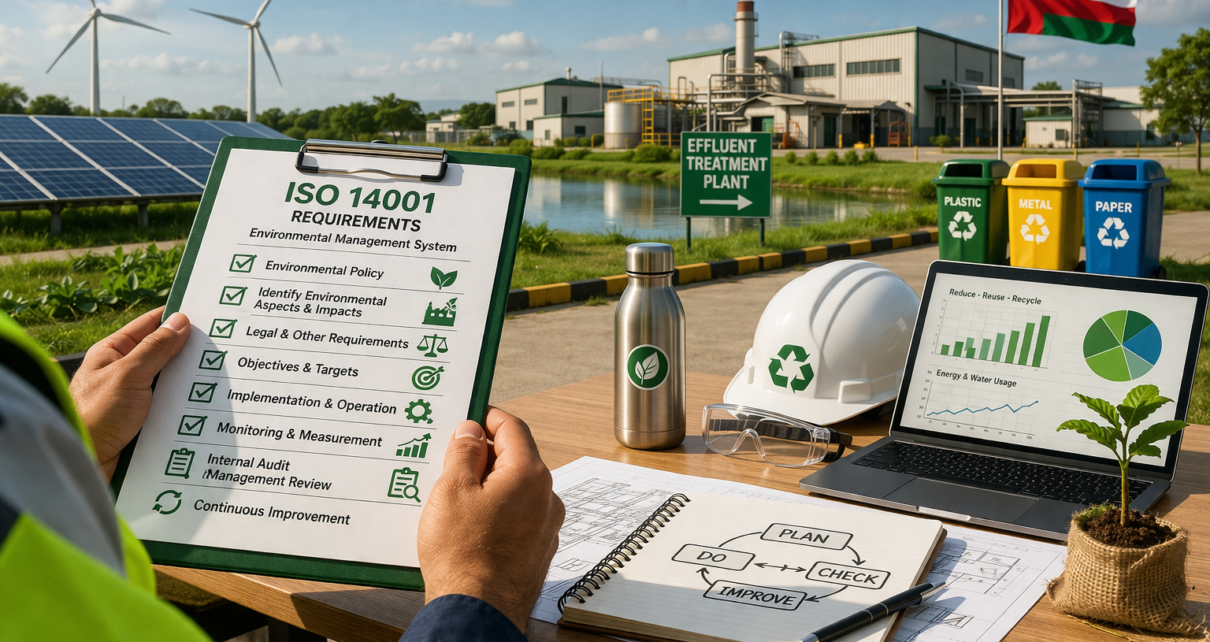
If you run a business and want to reduce environmental impact while building trust, understanding ISO 14001 is a smart place to start. Many companies think ISO standards are complex and full of technical language. But in reality, the core requirements of ISO 14001 are quite practical and easy to understand when broken down into simple steps.
This guide explains ISO 14001 requirements in plain English, so you can see how they apply to real business operations.
What is ISO 14001 in Simple Terms?
ISO 14001 is an international standard that helps businesses manage their environmental responsibilities. It provides a structured way to reduce waste, control pollution, and improve sustainability.
Instead of telling you exactly what to do, it gives you a framework. This means every company, no matter its size or industry, can apply it in a way that fits its operations.
The Core Idea Behind ISO 14001
At its heart, ISO 14001 follows a simple cycle:
Plan → Do → Check → Improve
This cycle ensures that your company doesn’t just make environmental promises but actually follows through and keeps improving over time.
Key ISO 14001 Requirements (Explained Simply)
Let’s break down the main requirements in a way that’s easy to understand and apply.
1. Understanding Your Environmental Impact
The first step is to identify how your business affects the environment.
Ask questions like:
- Do we produce waste?
- Do we use a lot of energy or water?
- Do our operations cause pollution?
These are called environmental aspects. Once you identify them, you can focus on reducing their negative impact.
2. Legal and Compliance Awareness
Every business must follow environmental laws. ISO 14001 requires you to:
- Know the regulations that apply to your industry
- Stay updated when laws change
- Ensure your business is always compliant
This reduces the risk of fines, penalties, or legal issues.
3. Setting Environmental Objectives
After understanding your impact, you need to set clear goals.
For example:
- Reduce energy consumption by 15%
- Minimize waste production
- Improve recycling processes
These goals should be realistic, measurable, and aligned with your business activities.
4. Creating an Environmental Policy
An environmental policy is a short statement that shows your company’s commitment to protecting the environment.
It should include:
- Your intention to reduce environmental harm
- Commitment to following legal requirements
- Focus on continuous improvement
This policy is often shared with employees and sometimes even customers.
5. Assigning Roles and Responsibilities
ISO 14001 requires clarity. Everyone in your company should know:
- What their role is in environmental management
- What actions they need to take
For example, a factory worker may be responsible for reducing material waste, while management ensures policies are followed.
6. Training and Awareness
Your team plays a key role in making ISO 14001 work.
You need to:
- Train employees on environmental practices
- Make them aware of company goals
- Encourage responsible behavior
When employees understand the “why,” they are more likely to follow the “how.”
7. Operational Control
This means managing your daily activities in a way that reduces environmental harm.
Examples include:
- Proper waste disposal methods
- Efficient use of resources
- Safe handling of chemicals
The goal is to make environmentally responsible actions part of your routine operations.
8. Emergency Preparedness
Things don’t always go as planned. ISO 14001 requires you to be ready for emergencies like:
- Chemical spills
- Fire incidents
- Environmental accidents
You should have a plan in place to respond quickly and minimize damage.
9. Monitoring and Measurement
You can’t improve what you don’t measure.
Businesses need to track:
- Energy usage
- Waste levels
- Emissions
This helps you understand whether your environmental efforts are working or not.
10. Internal Audits
An internal audit is like a health check for your system.
You review:
- Are you following your own processes?
- Are your goals being achieved?
This step helps identify gaps and areas for improvement before external audits.
11. Management Review
Top management must stay involved.
They regularly review:
- Environmental performance
- Progress toward goals
- Areas needing improvement
This ensures that environmental management remains a priority at the highest level.
12. Continuous Improvement
This is one of the most important parts of ISO 14001.
It’s not about being perfect from day one. Instead, it focuses on:
- Making small improvements over time
- Learning from mistakes
- Updating processes when needed
This ongoing effort is what makes ISO 14001 effective in the long run.
Why These Requirements Matter
When implemented properly, ISO 14001 helps businesses:
- Reduce operational costs through efficient resource use
- Avoid legal issues and penalties
- Build a strong reputation as an environmentally responsible company
- Gain trust from customers and partners
For companies exploring ISO 14001 in Oman, these requirements are especially valuable as environmental regulations and sustainability expectations continue to grow.
Final Thoughts
ISO 14001 may seem technical at first, but its requirements are based on simple and practical ideas: understand your impact, follow the rules, improve your processes, and keep getting better.
By focusing on these core principles, any business can create a system that not only protects the environment but also supports long-term growth.
If you approach it step by step, ISO 14001 becomes less of a certification and more of a smart way to run a responsible and efficient business.