
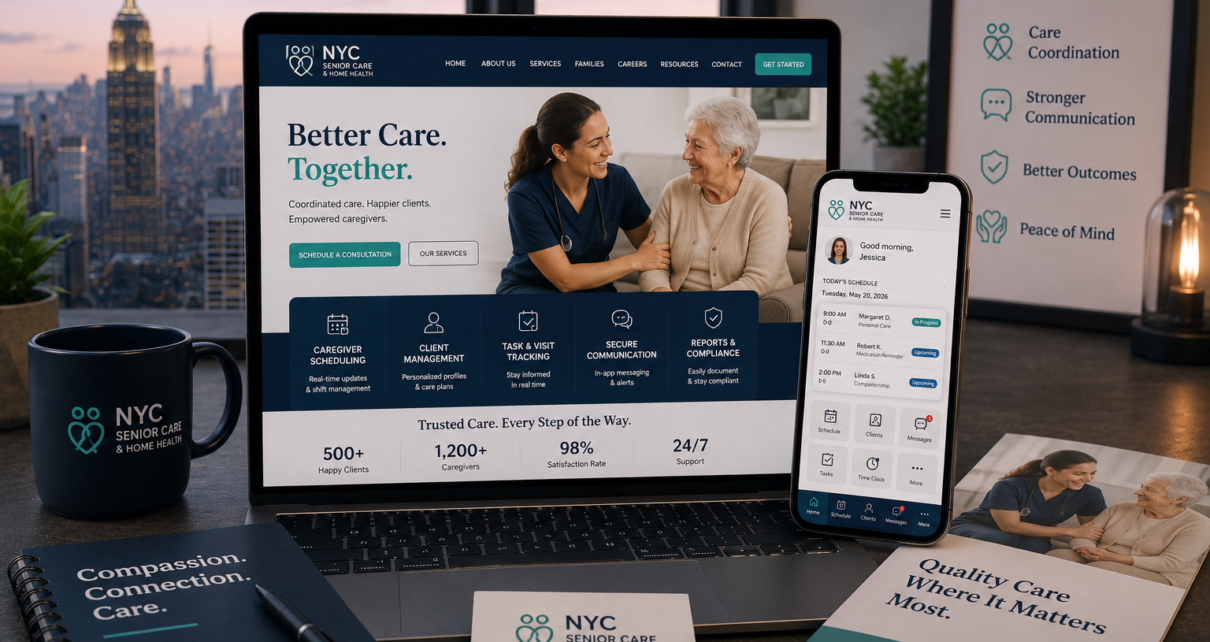
Coordinating a network of home health aides across New York’s five boroughs, matching caregiver availability to client needs, verifying visits actually happened, and keeping anxious family members informed about their loved one’s care, is an operational challenge that phone calls and paper schedules cannot handle reliably at scale, which is exactly why NYC home health and senior care agencies are partnering with a software development company in New York to build caregiver coordination, visit verification, and family communication tools into a single, reliable system.
New York’s home health and senior care industry serves a population that’s both growing in size and becoming more sophisticated in its expectations. Adult children coordinating care for aging parents increasingly expect the same digital transparency from a home care agency that they get from any other service they manage from their phone. The agencies retaining the most clients and commanding premium rates are the ones that have built communication and accountability systems that genuinely reassure families who can’t always be present for every care visit.
This article breaks down exactly how NYC senior care agencies are using mobile apps in 2026 to coordinate caregivers efficiently and communicate transparently with families.
The Coordination and Trust Challenges Senior Care Agencies Face
Caregiver scheduling across a large client roster with variable shift lengths, multiple caregivers serving the same client, and frequent schedule changes due to caregiver availability is genuinely complex to manage through phone calls and paper schedules without errors that directly affect care quality.
Visit verification, confirming caregivers arrived on time, stayed the full scheduled shift, and completed required care tasks, is a regulatory and billing compliance requirement that manual systems handle unreliably, creating both liability exposure and billing disputes.
Family communication anxiety is pervasive in home care. Adult children who live across the city or in other states from an aging parent have limited visibility into what’s actually happening during care visits, creating anxiety that erodes client retention even when the actual care quality is high.
How NYC Senior Care Agencies Are Using Mobile Apps in 2026
1. Caregiver Scheduling and Shift Management
Agency coordinators manage caregiver schedules, shift assignments, and client-caregiver matching through the app, with automated notifications to caregivers of upcoming shifts and real-time visibility into schedule coverage across the full client roster.
2. Electronic Visit Verification (EVV)
GPS-confirmed check-in and check-out at each visit, required under federal Medicaid EVV mandates, is captured automatically through the app, creating the compliance documentation required for billing while simultaneously confirming visit completion to agency coordinators and families.
3. Care Task Documentation
Caregivers document completed care tasks, medication administration, meal service, and any observations about the client’s condition directly in the app after each visit, creating a real-time care record accessible to agency coordinators and, in appropriate formats, to family members.
4. Family Communication Portal
Family members access a dedicated view within the app showing visit history, completed care tasks, and caregiver notes, giving them genuine visibility into their loved one’s daily care without requiring calls to the agency for routine updates.
5. Incident and Concern Reporting
Caregivers can flag concerns, changes in client condition, fall incidents, and medication questions directly through the app with immediate notification to agency supervisors, enabling faster response to situations that require clinical or supervisory attention.
What a Senior Care Agency App Costs in New York
| App Type | Features | Estimated Cost | Timeline |
|---|---|---|---|
| Basic Scheduling + EVV App | $22,000 – $45,000 | 12–18 weeks | |
| Mid-Tier Platform | Above + family portal + care documentation | $45,000 – $90,000 | 18–26 weeks |
| Full Agency Platform | Above + billing integration + multi-location | $90,000 – $180,000 | 26–36 weeks |
FAQ: NYC Home Health and Senior Care Agency Owners Ask
Q1. Is EVV mandatory for our agency in New York?
New York State has implemented EVV requirements for Medicaid-funded home care services under federal law; agencies providing Medicaid home health aide or personal care services must use an approved EVV system. A custom app can be built to meet EVV requirements, though agencies should confirm their specific obligations with their MCO or state program contacts.
Q2. How do we handle caregivers who aren’t comfortable with smartphone apps?
A well-designed app with a simple, intuitive interface specifically built for caregivers of varying technical comfort levels addresses this. Large buttons, simple workflows, and clear visual confirmation of completed actions make the tool accessible to caregivers who aren’t highly tech-comfortable. Telephone check-in backup options can also be maintained for situations where app use isn’t feasible.
Q3. Can the family portal show the real-time location of caregivers during shifts?
Location tracking capabilities can be included with appropriate consent frameworks, though most agencies balance transparency with caregiver privacy by showing check-in/check-out confirmation and care documentation rather than continuous real-time location tracking throughout a shift.
Q4. How does the app integrate with our billing system?
Visit verification data captured through the app can be exported to or integrated with common home health billing platforms, reducing manual data re-entry and the billing errors that result from manually transferring visit records.
Q5. What’s the biggest operational improvement agencies report after implementation?
Reduced scheduling errors and significantly improved family satisfaction scores, the combination of reliable caregiver coordination and transparent family communication addresses the two most common sources of client dissatisfaction and early termination in home care relationships.
The Bottom Line
New York’s home health and senior care agencies operating at scale in 2026 cannot manage caregiver coordination, regulatory compliance, and family communication effectively through phone calls and paper systems. Partnering with an experienced software development company in New York to build integrated caregiver coordination and family transparency tools is how the most professionally run NYC agencies are reducing operational errors, maintaining compliance, and building the client trust that drives long-term retention in one of the city’s most important care industries.