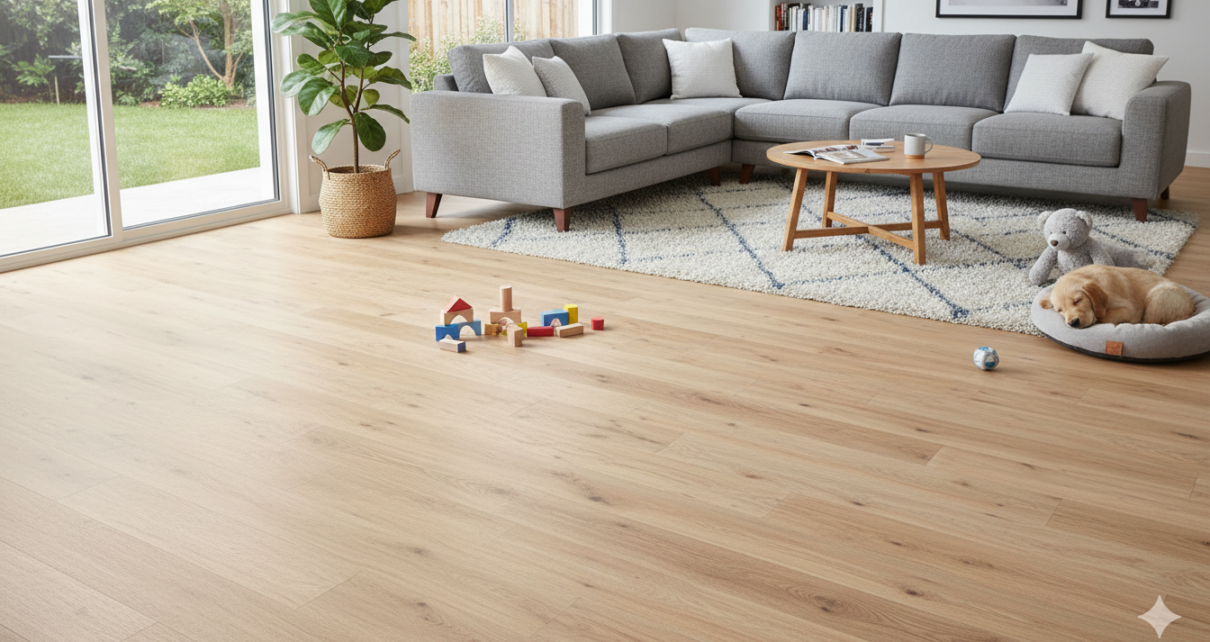
Let’s talk floors. If you’re building or renovating down under, hybrid flooring has probably crossed your radar. And fair enough, too. Our harsh climate throws a lot at our homes. Scorching summers? Yep. Humid wet seasons? You bet. Add kids and the family dog into the mix, and traditional floors just cop a beating. Hybrid gives you that stunning timber look without thinking about its upkeep. Let’s dive into what you really need to know before you buy.
What Exactly Are We Dealing With?
View this hybrid flooring as the ideal trade-off. Many planks are made with four separate parts: one hard, scratch-proof outer film, one clear wood-look sheet, one firm liquid-proof base, plus a sound pad. While browsing, you find both SPC (Stone Plastic Blend) and WPC (Wood Plastic Blend) builds. For real long life, choose only SPC. It’s denser, handles our crazy temperature swings way better, and is the absolute gold standard for most Aussie homes.
Why We Love It
There are loads of benefits of hybrid flooring, yet the top win by far is that it’s 100% waterproof right through to the core. Unlike old-style laminate, which puffs up like a sponge if you spill a pint, a solid hybrid plank will simply handle wet spots like kitchens, washrooms, plus laundries. Plus, that hard top skin takes a hammering from pets racing down the hall or stray toys without showing every small mark.
Picking the Good Stuff
Don’t just grab the cheapest box you find at the hardware store. You want a wear layer of at least 0.5mm for a standard family home; anything less should really only be used in low-traffic spaces like a spare bedroom. Board thickness matters too, especially if you have a two-storey house. A solid SPC core needs to be around 7mm thick to handle the natural “bounce” of upper-level timber subfloors without the click-lock joints snapping under pressure.
Hybrid vs. The Alternatives
Where does it sit next to the others? Basic laminate stays budget-friendly, but its timber-fibre base puffs and warps forever once liquid leaks through the top. Vinyl plank stays waterproof, yet since it’s very bendy and soft, big sofas and kitchen seats might make lasting marks with time. Hybrid lands right in the middle, giving the stiffness of a tough board plus that spill-proof calm of mind from vinyl.
Laying It Down
Getting the subfloor right is absolutely crucial. Hybrid flooring installation requires a very flat surface, we’re talking no more than a 3mm deviation over a one or two-metre span. If your concrete slab is full of dips and humps, the joints will inevitably fail. Here’s a massive tip: even if your boards have pre-attached underlay, you must always throw down a builder’s plastic moisture barrier over concrete slabs. It stops alkaline moisture from rising up and eating away at the joints, which is a total lifesaver.
The Cost and Long-Term Care
Right, how much will it actually cost? Expect to shell out about $35 to $90 for each square metre for the planks alone, based on the chosen plank style. Toss in another $25 to $60 per square metre if you hire a pro to install them. Obviously, local rates apply, whether you are renovating a Sydney apartment or getting quotes for hybrid flooring in Werribee. Prices will vary based on your location and subfloor prep, so always shop around.
Final Thought:
Once it’s finally down, looking after it is an absolute breeze. Just give it a sweep and a slightly damp mop with a pH-neutral cleaner. Pop some felt pads under your heavy furniture, and whatever you do, keep the steam mop in the cupboard; intense heat and steam are the fastest way to ruin your brand-new floors.
You can also read more about choosing the best wood flooring to better understand how different flooring options compare before making your final decision.