
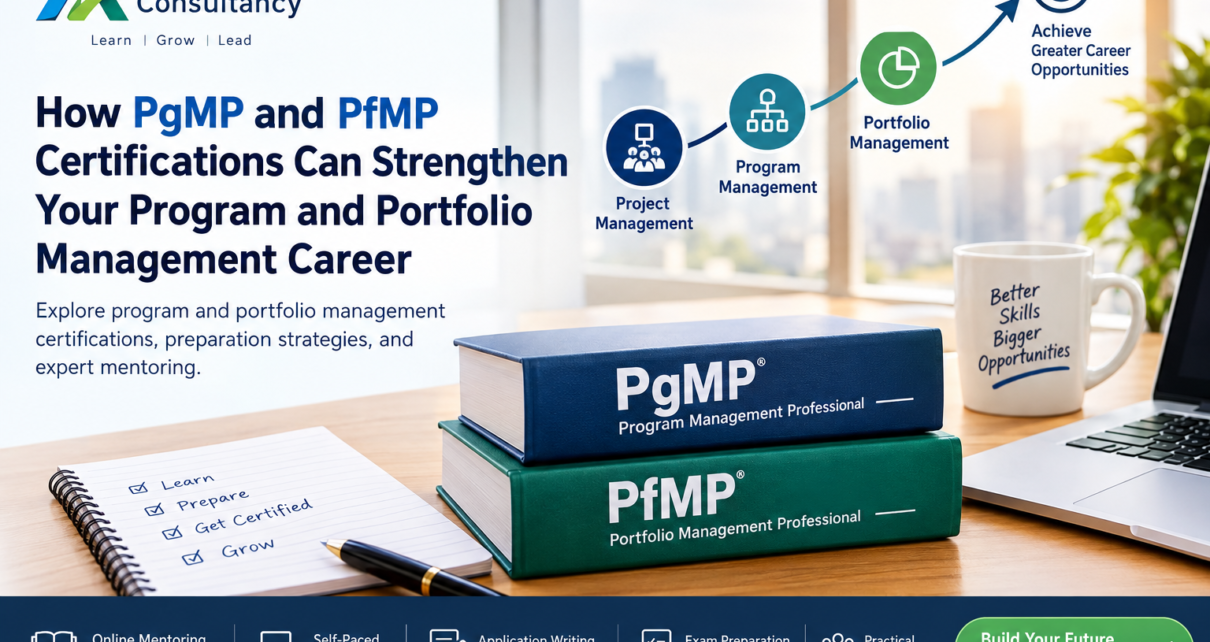
How PgMP and PfMP Certifications Can Strengthen Your Program and Portfolio Management Career
In today’s competitive business environment, organizations need experienced professionals who can manage complex programs, align projects with strategic objectives, and ensure that investments deliver measurable value. For project managers looking to expand their leadership responsibilities, professional development through advanced certifications can be an important step.
The Program Management Professional (PgMP) and Portfolio Management Professional (PfMP) certifications are designed for professionals working at different levels of organizational leadership. Understanding their focus can help you choose a learning path that aligns with your career goals.
Understanding PgMP Certification
The PgMP certification is intended for experienced program managers who oversee multiple related projects and coordinate their activities to achieve broader organizational benefits.
Unlike project management, which focuses on delivering a specific project, program management involves coordinating interconnected projects, managing dependencies, addressing risks, and ensuring that outcomes support strategic business objectives.
Preparing for the PgMP certification can help professionals strengthen their understanding of program governance, stakeholder engagement, benefits management, and strategic alignment.
What Is PfMP Certification?
The Portfolio Management Professional (PfMP) certification focuses on managing a collection of projects, programs, and other initiatives to support organizational strategy.
Portfolio managers evaluate priorities, allocate resources, monitor performance, and help organizations make informed investment decisions. Their responsibilities involve balancing competing demands while ensuring that initiatives contribute to business objectives.
PfMP certification is relevant to experienced professionals involved in portfolio governance, strategic planning, investment prioritization, and organizational decision-making.
PgMP vs. PfMP: Understanding the Difference
Although both certifications focus on strategic leadership, their primary areas of responsibility differ.
PgMP focuses on program-level outcomes. It emphasizes coordinating related projects, managing interdependencies, and delivering intended benefits.
PfMP focuses on portfolio-level decisions. It emphasizes selecting, prioritizing, and overseeing investments and initiatives in line with organizational strategy.
Professionals should consider their current responsibilities, experience, and future career objectives when deciding which certification to pursue.
Preparing for Certification While Working Full-Time
Balancing certification preparation with professional responsibilities can be challenging. A structured study plan helps candidates organize their learning and maintain consistent progress.
Here are some practical steps to consider:
1. Understand the certification requirements
Review the relevant eligibility criteria and application requirements before beginning your preparation. Make sure your professional experience aligns with the certification you intend to pursue.
2. Build a realistic study schedule
Set aside dedicated time each week for learning, revision, and practice questions. A consistent routine can make preparation more manageable alongside a full-time role.
3. Focus on practical application
Connect management concepts with real workplace situations. Case studies, practical examples, and scenario-based questions can help you understand how to apply frameworks when making decisions.
4. Prepare your application carefully
Document your professional experience clearly and accurately. Organize your responsibilities, contributions, and outcomes so they reflect the appropriate program or portfolio management perspective.
5. Practice and review regularly
Use practice questions to identify knowledge gaps. Review incorrect answers, revisit challenging concepts, and adjust your study plan as needed.
How Augment Consultancy Supports Your Learning Journey
Choosing the right learning support can help professionals approach certification preparation with greater structure and clarity.
Augment Consultancy offers learning and mentoring programs for PgMP and PfMP candidates. Its offerings include live online mentoring, self-paced learning options, application writing and review support, exam preparation resources, and practical case studies.
The programs are led by Sanjeev Kumar, founder of Augment Consultancy, who brings more than 20 years of experience in project, program, and portfolio management.
Candidates can explore the available PgMP and PfMP online mentoring programs to understand the learning approach and available preparation options.
For professionals who need help with the application process, the consultancy also provides PgMP and PfMP application support, including guidance on application writing and review.
Building Long-Term Leadership Skills
Professional certifications are not just about passing an examination. Preparing for an advanced credential can also encourage professionals to review their management practices, strengthen strategic thinking, and develop a broader understanding of organizational priorities.
Program and portfolio management require communication, leadership, risk awareness, stakeholder engagement, and the ability to connect business strategy with execution. Developing these capabilities can support professionals as they take on more complex responsibilities.
Conclusion
PgMP and PfMP certifications serve different purposes within the project, program, and portfolio management landscape. PgMP is centered on coordinating related projects and delivering program benefits, while PfMP emphasizes strategic investment decisions and portfolio performance.
By understanding these differences, reviewing eligibility requirements, and following a structured preparation plan, professionals can make informed decisions about their development.
Explore Augment Consultancy to learn more about its PgMP and PfMP mentoring programs, application support services, and professional learning resources.