
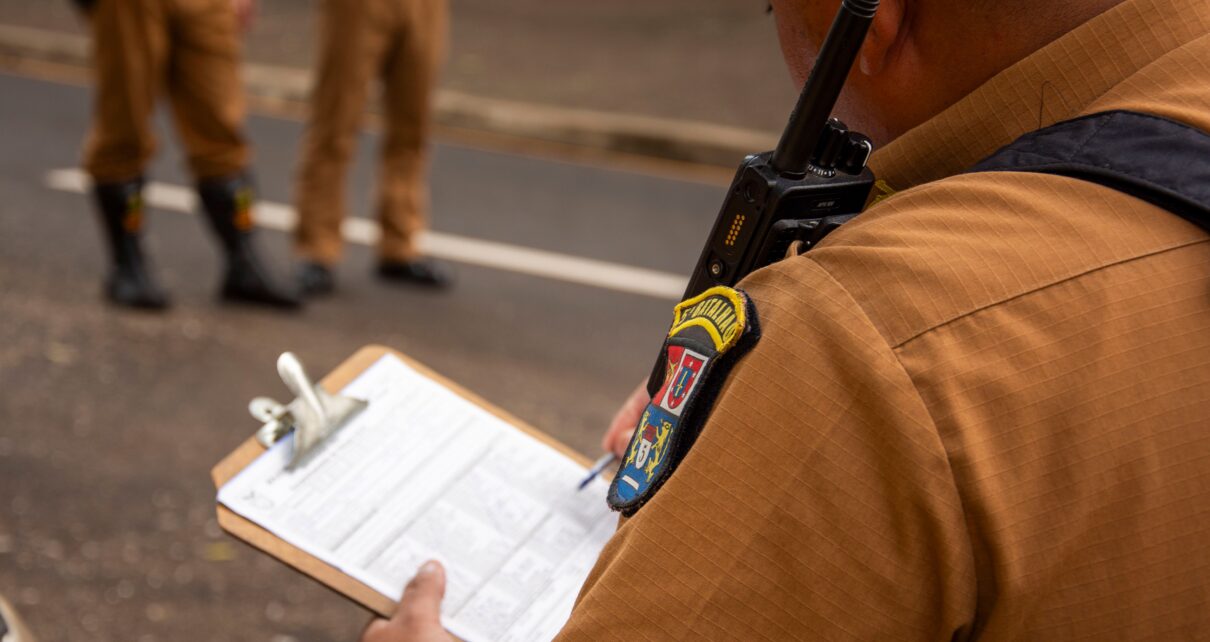
Picture the end of a long shift. You find a door unlocked and a vehicle damaged in the parking lot, and a supervisor needs to know exactly what happened. In moments like these, your written report becomes the official record of the event.
Whether you are an unarmed security guard patrolling a retail center, an armed officer protecting a facility, or a supervisor reviewing your team’s logs, the quality of your reports shapes how your work is judged. This incident reporting guide covers why reports matter, what to include, how to write one step by step, and how to avoid the habits that weaken it.
Why Clear and Effective Report Writing Matters
An incident report is often the only lasting record of what you saw and did. It carries more weight than most people expect, and writing one requires your full attention. Let’s break down the reasons why:
- It’s your main tool on post. Security work depends on observation, deterrence, and communication. These skills matter in this field, and a written report is where all three become visible. Your observations supply the facts, your remarks show how you deterred or defused a problem, and your clear writing communicates it all to supervisors and clients.
- It protects you and your employer. When a complaint or dispute comes up weeks later, memories fade, but the report remains. A timely, accurate account shows that procedures were followed and that your decisions were made for sound reasons, which gives both you and your employer something solid to point to.
- It reveals patterns. A single report describes one event, but reports compared over time show what keeps happening, such as a door that’s repeatedly left unlocked. With that evidence, management can fix the underlying cause instead of reacting to the same issue again and again.
- It builds your career. Employers and law enforcement agencies both value people who document clearly, because it’s one of the core skill requirements for unarmed security guards and armed officers. It also signals sound judgment and attention to detail.
What Your Incident Report Should Include
A solid report directly answers questions a supervisor or investigator would typically ask in person. It always leads with the core facts, followed by supplemental details to better explain the incident. Here are the basic questions you can use as a checklist for guidance when writing your report:
Who was involved?
Get the names, roles, and physical attributes of all people involved in the scene, including witnesses. Be accurate with descriptions, especially for unknown individuals.
What happened?
Use simple, factual words to describe the incident. Include only what you saw, heard, or smelled, not what you assume.
When did it happen?
Write down the exact date and time. Add timestamps if possible. Whether your notes on the timing are clear can change how an event is understood, especially when reviewing camera footage.
Where did it happen?
Give precise locations for clear reference if further investigation is necessary, such as a room number, entrance, or parking row.
Why and how did it happen?
State the cause of the situation only if it’s known, and explain how it was resolved. Don’t guess about motives, as they can undermine your report’s credibility.
Once the core facts are down, add the details that let someone else verify and act on your account. These include:
- Your actions and who else responded. Write what you did and when, along with anyone who arrived to help, such as a supervisor, paramedics, or police.
- Evidence. If applicable, write down the specific cameras that were able to capture the incident. Add precise timestamps and references to any photos you captured to aid with reviewing the footage.
- Witnesses and property. Take note of names and contact information while people are still on site. For damaged or missing items, write down serial numbers or distinct marks.
- What’s still open. Mention anything that needs follow-up, like a repair or a callback from police, so it doesn’t get neglected.
How to Write an Incident Report Step by Step
Knowing what to include is half the task. The other half is putting it together in a clear order. The following process keeps your report organized, even after a stressful event.
- Take notes immediately: Write down details of time, place, people involved, and immediate actions as soon as possible. A pocket notepad makes this easy on the go.
- Start with a summary: Open with a sentence or two covering who, what, where, when, and how it ended. Anyone skimming should get the gist right away.
- Report in chronological order: Walk through the incident the way it unfolded, from what first caught your attention to the moment it was resolved. If you’re unsure of a time, say it was approximate instead of guessing.
- Outline what you did: Include when you called for backup, who showed up, and any delays along the way. If something didn’t go smoothly, put it in. A report that admits the rough spots is more believable than one that doesn’t.
- Include evidence: Mention the photos you took, the camera that caught the event, and the people who gave statements, so a reviewer knows where to look.
- Raise what’s left to do: If a repair, a police callback, or an interview is still pending, note it. Add an update later if new information comes in.
- Proofread before filing: Check names, times, and spelling, and cut anything that’s opinion. Then file it the same shift if you can.
Common Mistakes and How to Fix Them
Following a solid process gets you most of the way there, but even experienced officers fall into habits that weaken a report without realizing it. For example, vague descriptions or personal opinions can cast doubt on how an incident was handled.
Such mistakes are easy to spot and fix once you know what to look for and why each hurts your report:
| Mistake | Why it weakens your report | The better approach |
| Missing information | Gaps in details invite others to fill them with assumptions | Check your draft against the five Ws. Indicate in your report if a specific detail is unavailable or unverifiable. |
| Opinions instead of facts | Impressions sound speculative, are easy to challenge, and can affect your report’s credibility. | Describe observable behavior plainly and factually. Instead of “the guest seemed furious,” say “the guest raised his voice and lunged at the staff member.” |
| Unorganized timeline | Jumping back and forth between events makes a report look unreliable. | Write events in a strict chronological sequence. |
| Excessive detail | Long commentary can bury the information that counts. | Relay only the facts that matter to the incident and have bearing on the investigation. |
| Informal language | Police/security officers, insurers, and attorneys are the people who will likely read your report. | Avoid using slang and unexplained abbreviations. |
| Late reporting | Memories can fade quickly, and small errors creep in the longer you wait to write the report. | Write your report soon after the event, ideally within the same shift or day. |
Sharpening the Skill Through Training and Practice
Strong reports rarely come naturally. Security officers build the skill gradually, through formal instruction, feedback from superiors, and plenty of repetition.
Most people start through formal training. Many states require state-approved security training before you can work a post, and documentation is usually taught alongside observation and de-escalation. That foundation sets a clear standard to write to before the first real incident for unarmed security guards, armed officers, and anyone entering the field.
What separates a competent report from a strong one is habit. These practices help you hone your reporting skills:
- Carry a notepad on every shift. Quick notes taken in the moment, such as times, plate numbers, and descriptions, make your final report far more accurate than anything recorded from memory.
- Ask a supervisor for feedback. A second set of eyes can catch unclear phrasing or missing details you won’t catch yourself, and it shows you take the work seriously.
- Practice on routine logs. Treating daily entries with the same care as major incidents builds the confidence and consistency you’ll need when something serious happens.
Conclusion
Months after an incident, you may not remember the details, but your report will still be on file, and the people who rely on it won’t have been there. That’s the best test of a good report.
Before you submit, ask yourself whether someone who never set foot on the site could reconstruct what happened, understand why you acted as you did, and decide what to do next, using nothing but your words. If they could, you’ve done the job well.
Moreover, it’s worth knowing that your reports speak for you in rooms you’ll never enter. Clients, insurers, investigators, and even future employers often form their view of your professionalism from the page alone. In that sense, a well-written report is the clearest proof of the care and professionalism you bring to the job.