The digital marketing landscape is evolving faster than ever. Artificial Intelligence (AI), voice search, personalized customer experiences, and short-form videos are changing how businesses attract and retain customers. Whether you’re a startup, local business, or established brand, having a well-planned digital marketing strategy is essential for success in 2026.
In this guide, you’ll learn how to build a powerful digital marketing strategy that helps increase brand awareness, generate leads, and grow revenue.
What Is a Digital Marketing Strategy?
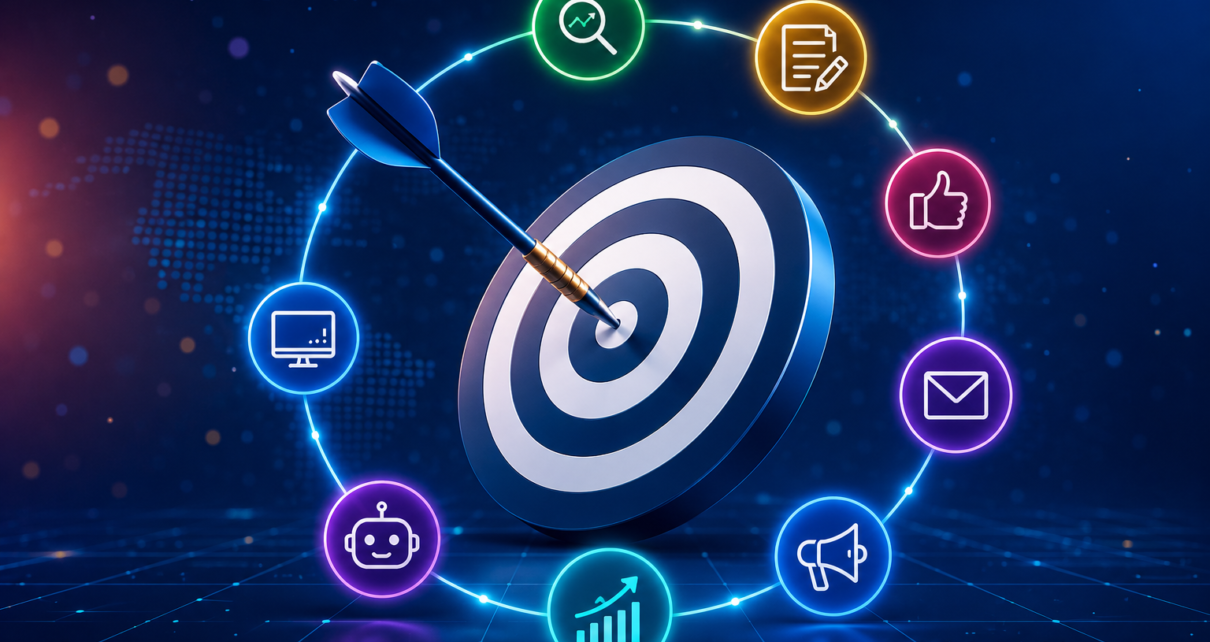
A digital marketing strategy is a comprehensive plan that outlines how a business will achieve its marketing goals using online channels such as:
- Search Engine Optimization (SEO)
- Content Marketing
- Social Media Marketing
- Email Marketing
- Pay-Per-Click (PPC) Advertising
- Video Marketing
- Influencer Marketing
- AI-Powered Marketing
Instead of randomly posting content or running ads, a strategy ensures every marketing effort supports your business objectives.
Why Your Business Needs a Digital Marketing Strategy
Without a strategy, businesses often waste time and marketing budgets.
A strong strategy helps you:
- Increase website traffic
- Generate high-quality leads
- Improve brand visibility
- Build customer trust
- Improve conversion rates
- Track marketing performance
- Maximize ROI
Step 1: Set Clear Marketing Goals
Start by defining SMART goals.
Examples include:
- Increase website traffic by 40% in six months
- Generate 100 qualified leads each month
- Grow Instagram followers to 20,000
- Increase online sales by 30%
- Improve Google rankings for important keywords
Clear goals help measure success.
Step 2: Understand Your Target Audience
Know exactly who you’re trying to reach.
Research:
- Age
- Gender
- Location
- Interests
- Online behavior
- Pain points
- Buying habits
Create customer personas to better understand your ideal audience.
Example:
Business Owner Rahul
- Age: 35
- Owns a local business
- Wants more online leads
- Uses Google daily
- Active on Instagram and Facebook
Step 3: Build a Professional Website
Your website is your digital storefront.
It should be:
- Mobile-friendly
- Fast-loading
- Secure (HTTPS)
- SEO optimized
- Easy to navigate
- Conversion-focused
- Include clear Call-to-Action buttons
A good website increases trust and conversions.
Step 4: Focus on SEO
SEO remains one of the highest ROI marketing channels in 2026.
Optimize your website by:
Keyword Research
Find keywords your audience searches.
Examples:
- Digital Marketing Strategy
- SEO Services
- Digital Marketing Agency
- Social Media Marketing
- Local SEO Services
On-Page SEO
Optimize:
- Titles
- Meta descriptions
- Headings
- URLs
- Images
- Internal links
Technical SEO
Improve:
- Website speed
- Core Web Vitals
- Mobile usability
- XML sitemap
- Schema markup
Local SEO
If you serve local customers:
- Optimize Google Business Profile
- Collect reviews
- Use location-based keywords
- Build local citations
Step 5: Create High-Quality Content
Content is still the foundation of digital marketing.
Create:
- Blog posts
- Videos
- Infographics
- Case studies
- Guides
- FAQs
- E-books
Helpful content builds authority and improves search rankings.
Step 6: Leverage Social Media
Choose platforms where your audience spends time.
Popular platforms include:
- YouTube
- X (Twitter)
Share:
- Educational content
- Behind-the-scenes
- Customer testimonials
- Product updates
- Reels and Shorts
- Live sessions
Consistency is key.
Step 7: Use AI to Improve Marketing
AI is transforming digital marketing in 2026.
Use AI tools for:
- Content creation
- SEO optimization
- Chatbots
- Email personalization
- Customer support
- Predictive analytics
- Marketing automation
AI saves time while improving efficiency.
Step 8: Invest in Paid Advertising
Organic growth takes time.
Use paid ads for faster results.
Popular platforms:
- Google Ads
- Facebook Ads
- Instagram Ads
- LinkedIn Ads
- YouTube Ads
Always monitor:
- Cost Per Click (CPC)
- Click-Through Rate (CTR)
- Conversion Rate
- Return on Ad Spend (ROAS)
Step 9: Build an Email Marketing Funnel
Email marketing remains one of the most profitable channels.
Send:
- Welcome emails
- Promotional offers
- Newsletters
- Product launches
- Abandoned cart reminders
- Customer follow-ups
Personalized emails improve engagement.
Step 10: Track Performance with Analytics
Measure everything.
Important metrics include:
- Website traffic
- Bounce rate
- Organic rankings
- Conversion rate
- Cost per lead
- Revenue
- Customer acquisition cost
- ROI
Use the data to improve campaigns continuously.
Digital Marketing Trends to Watch in 2026
Stay ahead by adopting these trends:
- AI-generated content with human editing
- Voice search optimization
- Personalized customer experiences
- Interactive videos
- Zero-click search optimization
- Influencer partnerships
- First-party data collection
- Conversational marketing
- Marketing automation
- Short-form video content
Businesses that adapt early gain a competitive advantage.
Common Mistakes to Avoid
Many businesses struggle because they:
- Ignore SEO
- Don’t define clear goals
- Post inconsistently on social media
- Focus only on selling
- Skip analytics
- Ignore mobile optimization
- Target the wrong audience
- Fail to test campaigns
Avoiding these mistakes improves marketing performance.
Final Thoughts
Creating a successful digital marketing strategy in 2026 requires more than just posting on social media or running occasional ads. It involves understanding your audience, setting measurable goals, creating valuable content, optimizing for search engines, leveraging AI, and continuously analyzing performance.
A well-executed strategy helps your business attract the right audience, build long-term customer relationships, and achieve sustainable growth in an increasingly competitive digital landscape.
Whether you’re launching a new business or scaling an existing one, investing time in a strong digital marketing strategy today will position your brand for success tomorrow.