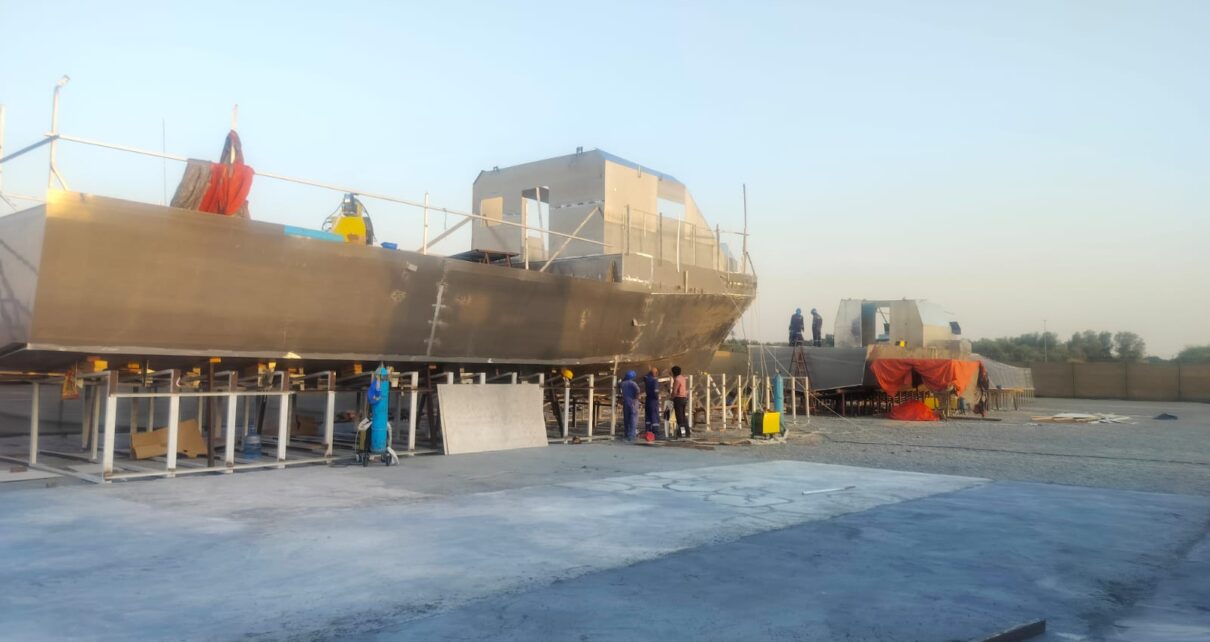
The global marine industry is moving toward faster, more efficient, and environmentally friendly vessels. This is one of the main reasons why aluminum barge builders are focusing heavily on lightweight vessel technology. Modern marine operators want barges that can reduce fuel consumption, improve cargo efficiency, and lower maintenance costs while maintaining high durability.
Lightweight marine vessels are becoming increasingly important in commercial shipping, offshore transport, inland water logistics, and industrial operations. Aluminum has emerged as one of the most preferred materials in modern shipbuilding because of its strength, corrosion resistance, and reduced overall weight compared to traditional steel structures.
According to marine industry reports, lightweight aluminum vessels can improve fuel efficiency by nearly 15% to 30% depending on vessel design and operational conditions. As fuel prices continue to rise globally, shipping companies are investing in advanced vessel technologies that can reduce long-term operational expenses.
The Importance of Lightweight Vessel Technology
Lightweight vessel technology refers to the use of advanced materials and modern engineering methods to reduce the total weight of a vessel without affecting its structural integrity or safety. Aluminum is one of the best materials for achieving this goal because it offers a high strength-to-weight ratio.
Compared to steel, aluminum is significantly lighter. This lower weight allows vessels to move more efficiently through water while requiring less engine power. Reduced resistance improves speed, lowers fuel usage, and enhances operational performance.
Many modern marine industries now prefer aluminum-based vessels for cargo transportation, offshore support, dredging operations, and coastal logistics because they provide better long-term efficiency.
Why Aluminum is Preferred in Marine Construction
One of the biggest reasons aluminum is widely used in modern marine construction is its natural corrosion resistance. Saltwater environments can quickly damage traditional steel vessels, leading to rust and expensive repairs. Aluminum naturally forms a protective oxide layer that prevents severe corrosion.
This durability helps reduce maintenance requirements and extends vessel lifespan. Research from marine engineering organizations suggests that aluminum vessels can remain operational for decades with proper maintenance.
Another major advantage is weight reduction. Lighter vessels place less strain on engines and propulsion systems, which improves overall efficiency. Many aluminium barge manufacturers are now developing advanced vessel designs that maximize performance while minimizing structural weight.
Modern aluminum alloys are also highly durable and capable of handling demanding marine conditions. This combination of strength and reduced weight makes aluminum ideal for commercial marine applications.
Fuel Efficiency and Reduced Operating Costs
Fuel expenses are one of the largest operational costs in the marine transportation industry. Lightweight aluminum barges help operators reduce these costs significantly.
According to studies by the International Maritime Organization (IMO), vessel weight directly affects fuel consumption. Even small reductions in vessel weight can create major savings over long operational periods.
For example, an aluminum barge may consume up to 20% less fuel than a steel vessel operating under similar conditions. Lower fuel usage not only reduces costs but also decreases greenhouse gas emissions.
As environmental regulations become stricter worldwide, fuel-efficient vessel designs are becoming essential for shipping companies and marine logistics providers.
Increased Cargo Carrying Capacity
Another important advantage of lightweight barges is increased cargo capacity. Since the vessel itself weighs less, operators can transport more cargo without exceeding weight limitations.
This is especially valuable for inland waterways and shallow-water routes where weight restrictions are common. Lighter vessels can maintain safe draft levels while carrying heavier loads.
Modern engineering techniques allow builders to optimize internal vessel structures for maximum cargo efficiency. Many barge builders in UAE are adopting advanced lightweight designs to support growing regional shipping and offshore industries.
Industry studies show that lightweight cargo vessels can improve transportation efficiency by nearly 10% to 15% in certain operations.
Better Speed and Maneuverability
Reduced vessel weight also improves speed and maneuverability. Lighter barges create less water resistance, allowing them to travel more smoothly and efficiently.
This improved performance is important for industries that rely on fast transportation schedules and offshore support services. Better maneuverability also improves navigation safety in busy ports, narrow waterways, and coastal operations.
Advanced hydrodynamic hull designs combined with aluminum construction help modern vessels achieve better stability and operational control.
Many marine operators prefer lightweight vessels because they reduce engine stress and improve overall navigation efficiency during long operational cycles.
Lower Maintenance Requirements
Maintenance is a major concern for vessel owners because repairs and downtime can be expensive. Traditional steel barges often require regular anti-corrosion treatment, repainting, and structural repairs.
Aluminum vessels generally require less maintenance because they resist rust naturally. This reduces repair frequency and lowers long-term operational expenses.
Industry reports indicate that maintenance costs for aluminum vessels can be approximately 30% lower compared to traditional steel vessels over their lifetime.
Lower maintenance requirements also allow vessels to remain operational for longer periods, increasing productivity and profitability for marine operators.
Environmental Advantages of Aluminum Barges
Environmental sustainability has become a major priority in global shipping industries. Governments and international marine organizations are introducing stricter regulations to reduce carbon emissions from vessels.
Lightweight aluminum barges support these environmental goals by consuming less fuel and producing fewer emissions. Reduced fuel consumption directly lowers the environmental impact of marine transportation.
Aluminum is also highly recyclable. Industry data suggests that nearly 75% of all aluminum ever produced is still in use because the material can be recycled repeatedly without losing quality.
This makes aluminum an environmentally responsible material for modern marine construction. Many companies now focus on sustainable shipbuilding practices to meet future environmental standards.
Technological Innovations in Modern Barge Construction
Advanced technology is playing an important role in modern vessel development. Today, many shipbuilders use computer-aided engineering, robotic welding systems, and precision manufacturing techniques to create lightweight yet durable vessels.
These innovations improve construction accuracy, reduce production time, and enhance vessel safety. Modern marine-grade aluminum alloys also provide improved impact resistance and structural performance.
A modern barge building company focuses on combining lightweight materials with advanced engineering solutions to meet the growing demand for efficient marine transportation.
Companies such as VU Marine are contributing to the development of advanced aluminum vessel technologies through modern marine engineering approaches and efficient vessel designs.
Growing Global Demand for Lightweight Marine Vessels
The demand for lightweight marine vessels continues to rise across commercial shipping, offshore operations, inland logistics, tourism, and dredging industries.
Global trade growth and increasing environmental awareness are encouraging shipping companies to modernize their fleets with fuel-efficient vessels. Marine industry reports predict strong growth in aluminum vessel demand over the coming years.
As operational efficiency becomes more important, lightweight vessel technology is expected to remain one of the biggest trends in modern shipbuilding.
The ability to reduce fuel costs, improve cargo efficiency, and support sustainability goals makes aluminum barges an ideal solution for the future of marine transportation.
Conclusion
Lightweight vessel technology is transforming the marine industry by improving efficiency, reducing operational costs, and supporting environmental sustainability. Aluminum barges provide several advantages including better fuel economy, increased cargo capacity, lower maintenance costs, and improved vessel performance.
Modern marine operators are increasingly choosing aluminum vessels because they offer long-term economic and environmental benefits. With continuous advancements in engineering and vessel construction technologies, lightweight aluminum barges are expected to play an even bigger role in future marine transportation systems.
As global shipping industries continue evolving, aluminum-based vessel construction will remain an important part of modern marine innovation.