
Driving around Melbourne’s west? It takes a massive toll on your ride. Whether you’re stuck in traffic crawling out of Williamstown or just doing the daily dash around Truganina, your car cops an absolute hiding.
Eventually, that little service sticker on the windscreen catches your eye. It’s time.
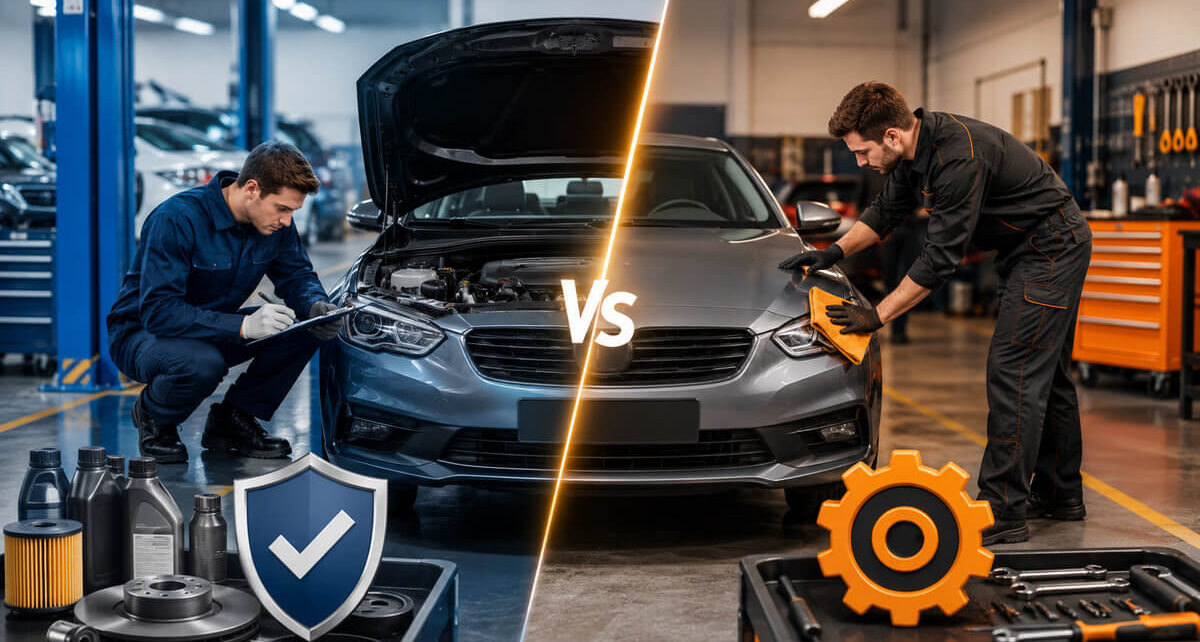
Still, when you begin calling for car service in Sunshine, you are often greeted with an obstacle wall: “Logbook or standard? ” If this is confusing and you have no idea, relax. Together, we will explain the real difference between the logbook service and the standard service, which one won’t leave you with a high bill unnecessarily.
What Exactly is a Logbook Service?
You can imagine a logbook service like a health program prescribed by car manufacturers to keep the vehicle fit and healthy through regular check-ups, replacements, and timely maintenance done in certain intervals of months or driven kilometres.
Here is what you need to know:
- Warranty Protection: If you still own your car under warranty, you’ll need this to stay on your warranty.
- The Dealership Myth: We need to knock this on the head right now: you do not have to go back to the dealership. Australian Consumer Law dictates that any qualified independent mechanic can do the job. As long as they follow the rulebook and use approved parts, your warranty is safe as houses.
- The Cost: Because it involves highly specific checks, expect to fork out anywhere between $200 and $600 for this, purely depending on what the manufacturer demands.
The Standard Service Explained
On the flip side, we have the standard service. Mechanics will often call this a minor service or a general check-up.
Instead of a rigid checklist, a standard service covers the essentials:
- Dropping the old engine oil and swapping the filter.
- Checking and topping up your vital fluids.
- Giving your brakes, tyres, battery, and lights a good once-over.
It’s brilliant for older vehicles that have long outlived their warranty. Because the mechanic relies on their own professional judgement to spot wear and tear, it’s a lot more flexible. Better yet? It’s usually much easier on the wallet, averaging around $150 to $300.
Surviving the Suburban Slog
Living in the outskirts usually entails stop-and-go traffic, which you have to deal with constantly. One moment you are stopping to brake for a speed bump, then the other you are stopping for so many red lights, not to forget that you have to avoid potholes as you go along.
This suburban slog impacts your vehicle in a few major ways:
- Engine Strain: The engine is subjected to more stress whenever we repeatedly idle and speed up.
- Rapid Brake Wear: Heavy traffic will require your brakes to be pressed almost continuously, and so the brake pads will become thin very quickly.
- Suspension Woes: Hit a curb lately? That’ll throw your suspension right out of whack. That is exactly why keeping tabs on things like wheel alignment and vehicle safety isn’t just a luxury; it’s an absolute must for local driving.
Driving on local roads can be quite hard. You get to know of minor problems with the car that you can fix early by having the car regularly checked. Not having a regular checkup is like you opening the door for car-related problems which will eventually get out of hand and cost you a pretty penny.
Crunch Time: Which Should You Choose?
It totally depends on where your car currently sits in its lifecycle:
- Still under warranty? Don’t risk it, always go the logbook route. Manufacturers can be incredibly strict. If you happen to miss a scheduled interval, they will absolutely use it as a convenient excuse to dodge any future warranty claims you might have.
- Planning to sell soon? A fully stamped service book is basically worth its weight in gold. It proves to prospective buyers that you’ve babied the vehicle, significantly jacking up its resale value and making it an absolute breeze to sell.
- Driving an older trusty steed? A standard service is the perfect way to go. Just find a reliable mechanic in Sunshine or a nearby suburb. They’ll keep your old faithful safe and roadworthy without charging you for complex, brand-specific inspections you simply don’t need.
Conclusion:
At the end of the day, both options keep you safely on the road. The right choice just comes down to your current warranty status and what you plan to do with the car long-term. Just don’t put it off. Book it in, get it sorted, and enjoy a stress-free drive through the west.