
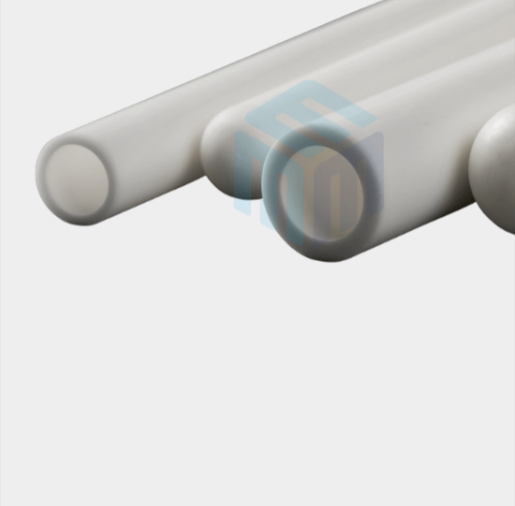
Industrial manufacturers rarely purchase a zirconia tube simply because it is made from zirconia. They purchase it because their process demands a ceramic component capable of surviving conditions that metals, quartz, alumina, and conventional ceramics cannot withstand.
Across Australia, industries such as semiconductor manufacturing, high-temperature furnace production, hydrogen technology, chemical processing, mining, metallurgy, glass manufacturing, environmental monitoring, and advanced materials research increasingly rely on zirconia ceramic tubes because of their outstanding combination of mechanical strength, thermal shock resistance, corrosion resistance, and chemical stability.
However, selecting zirconia alone is not enough.
One of the biggest mistakes engineers make is assuming every zirconia tube performs the same. In reality, choosing between dense zirconia ceramic tubes and porous zirconia tubes can significantly influence process efficiency, energy consumption, filtration performance, component lifespan, and production costs.
A dense tube designed for molten metal applications may completely fail in a gas diffusion system, while a porous tube used in a high-pressure furnace can fracture under mechanical load.
Understanding the difference between these two structures is therefore essential for engineers, laboratory managers, procurement specialists, and equipment manufacturers.
This guide explains how dense and porous Zirconia Tube and rods differ, where each performs best, and how to select the right solution for industrial applications across Australia.
Why Internal Structure Matters More Than Material Composition
Both dense and porous zirconia are manufactured from zirconium dioxide (ZrO₂).
The chemical composition is often nearly identical.
The major difference lies in microstructure.
During manufacturing, powder processing and sintering determine whether the finished component becomes:
- Nearly pore-free (Dense)
- Controlled open porosity (Porous)
Although the chemistry remains almost the same, their engineering performance becomes completely different.
This is why engineers select zirconia based on structure rather than chemical formula.
Dense vs Porous Zirconia: Understanding the Microstructure
Dense Zirconia
Dense zirconia is manufactured using high-pressure forming and precision sintering.
During firing, ceramic particles fuse together until almost all microscopic pores disappear.
Typical characteristics include:
- Density above 95–99%
- Extremely low porosity
- High mechanical strength
- Excellent wear resistance
- Very low gas permeability
- Smooth surface finish
The result is a structural engineering ceramic designed for demanding mechanical environments.
Porous Zirconia
Porous zirconia follows a different manufacturing route.
Special pore-forming additives are incorporated before sintering.
During firing, these additives burn away, leaving a controlled network of interconnected pores.
Depending on the application, pore size may vary from a few microns to several hundred microns.
Instead of maximizing strength, porous zirconia is engineered to optimize:
- Gas flow
- Liquid permeability
- Surface area
- Thermal insulation
Comparison Table: Dense vs Porous Zirconia Tubes
| Property | Dense Zirconia Tube | Porous Zirconia Tube |
| Density | Very High | Lower |
| Porosity | <5% | 10–50% (Application Dependent) |
| Mechanical Strength | Excellent | Moderate |
| Gas Permeability | Nearly Zero | High |
| Thermal Shock Resistance | Excellent | Good |
| Abrasion Resistance | Excellent | Moderate |
| Pressure Resistance | Excellent | Limited |
| Filtration Capability | Poor | Excellent |
| Chemical Resistance | Excellent | Excellent |
| Typical Service Life | Longer | Depends on Filtration Conditions |
Industrial Applications Where Dense Zirconia Tubes Are the Better Choice
Dense zirconia ceramic tubes are selected whenever the component must withstand severe mechanical, thermal, or chemical loading.
Typical industries include:
High Temperature Furnaces
A dense zirconia tube acts as:
- Thermocouple protection tube
- Furnace protection sleeve
- Heating element insulator
- Sample processing tube
The dense structure prevents gas penetration while maintaining dimensional stability above 1500°C.
Molten Metal Processing
Dense zirconia is highly resistant to:
- Aluminium
- Copper alloys
- Precious metals
- Molten steel slags
Its excellent corrosion resistance makes it suitable for immersion tubes and sampling systems.
Semiconductor Manufacturing
Semiconductor production demands:
- Ultra-clean surfaces
- Low particle generation
- High purity
- Excellent dimensional stability
Dense zirconia minimizes contamination inside vacuum processing systems.
Laboratory Equipment
Research laboratories use dense zirconia ceramic tubes for:
- Thermal analysis
- High-temperature reactors
- Vacuum furnaces
- Controlled atmosphere furnaces
Because the material is nearly pore-free, contamination risks remain extremely low.
Industrial Applications Where Porous Zirconia Tubes Perform Better
Porous zirconia serves an entirely different purpose.
Instead of acting as a structural component, it controls gas or liquid movement.
Common applications include:
High Temperature Gas Filtration
Porous tubes remove:
- Dust particles
- Metal vapours
- Process contaminants
- Catalyst residues
while maintaining excellent heat resistance.
Hydrogen Technology
Hydrogen production systems require precise gas movement through ceramic structures.
Controlled porosity improves:
- Gas distribution
- Reaction efficiency
- Thermal management
Oxygen Sensors
Automotive and industrial oxygen sensors rely on controlled gas diffusion through porous zirconia.
The material allows oxygen transport while maintaining high-temperature stability.
Catalyst Support Systems
Large internal surface area makes porous zirconia ideal for catalytic reactors.
Benefits include:
- Better catalyst adhesion
- Improved reaction efficiency
- Enhanced chemical conversion
Choosing Between Dense and Porous Zirconia Tubes for Different Industrial Applications
| Industrial Process | Recommended Material | Reason |
| Heat Treatment Furnaces | Dense Zirconia Tube | High strength |
| Thermocouple Protection | Dense Zirconia Tube | Excellent thermal shock resistance |
| Molten Metal Handling | Dense Zirconia Tube | Chemical resistance |
| Vacuum Furnaces | Dense Zirconia Tube | Low gas permeability |
| Semiconductor Processing | Dense Zirconia Tube | High purity |
| Gas Diffusion | Porous Zirconia Tube | Controlled permeability |
| Hot Gas Filtration | Porous Zirconia Tube | Filtration efficiency |
| Fuel Cells | Porous Zirconia Tube | Ionic transport |
| Catalyst Supports | Porous Zirconia Tube | Large surface area |
Zirconica Tubes: Common Buying Mistakes
Australian manufacturers frequently make several costly mistakes when purchasing zirconia products.
Selecting Dense Tubes for Filtration
Dense zirconia blocks gas flow completely.
Using it for filtration results in poor process performance.
Using Porous Tubes Under High Mechanical Load
Porous tubes contain engineered voids.
These reduce mechanical strength and may lead to cracking under pressure.
Ignoring Thermal Cycling
Processes involving rapid heating and cooling require excellent thermal shock resistance.
Selecting the wrong microstructure shortens service life.
Focusing Only on Zirconia Rod Price
Many buyers compare only zirconia rod price.
However, replacing failed components often costs far more than purchasing premium-quality ceramics.
Dense Zirconia Tubes vs Alternative Ceramic Materials
| Property | Dense Zirconia | Alumina | Quartz |
| Mechanical Strength | Excellent | High | Low |
| Thermal Shock Resistance | Excellent | Moderate | Good |
| Fracture Toughness | Highest | Moderate | Very Low |
| Wear Resistance | Excellent | Good | Poor |
| Corrosion Resistance | Excellent | Excellent | Moderate |
| Service Life | Very Long | Long | Moderate |
How to Select the Right Zirconia Tube for Your Process
Before purchasing zirconia ceramic tubes, evaluate:
- Operating temperature
- Mechanical loading
- Process pressure
- Chemical exposure
- Gas permeability requirements
- Thermal cycling frequency
- Abrasion conditions
- Component lifespan
- Machining tolerances
- Surface finish requirements
These factors are often more important than material cost.
Choosing Reliable Zirconia Tube Suppliers in Australia
Experienced zirconia tubes suppliers should provide:
- High-purity zirconia grades
- Precision-machined components
- Custom tube dimensions
- Tight dimensional tolerances
- Technical material selection support
- Quality inspection reports
- Consistent manufacturing standards
- Reliable delivery throughout Australia
Working with knowledgeable suppliers helps ensure the selected zirconia tube matches the actual process requirements rather than simply the requested dimensions.
Final Thoughts
Dense and porous zirconia are not competing materials—they are engineered for completely different industrial functions. Dense zirconia ceramic tubes excel in structural applications where strength, wear resistance, thermal shock performance, and corrosion resistance are critical, making them the preferred choice for furnaces, semiconductor equipment, molten metal handling, and laboratory reactors. Porous zirconia, by contrast, is designed for controlled permeability and is indispensable in filtration systems, gas diffusion devices, fuel cells, catalyst supports, and oxygen sensing technologies.
For manufacturers, research organisations, mining companies, and industrial processing facilities across Australia, understanding these differences ensures the correct selection of Zirconia Tube and rods for each application. Rather than comparing products based solely on zirconia rod price, selecting the right microstructure and partnering with experienced zirconia tubes suppliers will improve equipment reliability, extend service life, reduce maintenance costs, and deliver better long-term process performance.


