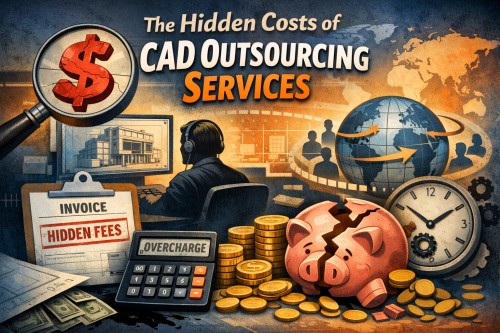
Many architectural and engineering firms eventually reach a point where their internal drafting teams are stretched too thin. The logical next step is usually looking outward. Sending drafting work to an external agency seems like the perfect way to scale operations quickly while keeping overhead low. You get a quote that promises exceptional work at a fraction of your local labor rates, and the decision feels like a no-brainer. However, the price tag on the initial proposal rarely tells the whole story. While CAD Outsourcing Services offer genuine benefits, an entire iceberg of hidden expenses often lurks just beneath the surface. If you are not careful, these unseen costs can completely wipe out your projected savings.
Understanding these hidden expenses is the first step toward making a smart outsourcing decision. By knowing exactly what to look out for, you can protect your firm’s budget, timeline, and reputation.
The Lure of Low-Cost Outsourcing
Companies generally seek out drafting assistance for three main reasons: reducing operational costs, accessing a wider pool of global talent, and improving overall efficiency. When you receive a bid from an overseas vendor, the hourly rates often look incredibly attractive.
The promise of getting high-quality work done while you sleep is hard to resist. Yet, this initial excitement can quickly fade once the actual project begins. The gap between the quoted price and the final cost of a completed, usable design is where the hidden expenses reside.
Hidden Cost 1: Communication and Coordination
Managing an external team requires significant time and effort. This management overhead is rarely factored into the initial budget.
Language Barriers
When your external team speaks a different primary language, instructions can be easily misinterpreted. A slight misunderstanding regarding building codes or material specifications can lead to extensive errors and costly rework.
Time Zone Differences
Having a team working while you sleep sounds great in theory. In practice, it can mean a 24-hour delay just to answer a simple question. This extended feedback loop drags out project timelines, costing you time and money.
Cultural Nuances
Different regions have different work ethics and communication styles. Some cultures may hesitate to ask for clarification when they do not understand a task, leading them to guess the requirements and deliver incorrect work.
Management Overhead
You still have to manage the people doing the work. The hours your senior architects spend writing detailed briefs, holding video calls, and monitoring progress are expensive.
Hidden Cost 2: Quality Control and Rework
The biggest drain on an outsourcing budget is usually the time spent fixing mistakes.
Varying Quality Standards
What passes as acceptable quality for a low-cost vendor might not meet your firm’s rigorous standards. You might find yourself receiving files with messy layers, incorrect scaling, or missing details.
Increased Review Cycles
Because you cannot fully trust the initial output, your internal team has to spend extra hours reviewing every single line of the drawing. This defeats the purpose of outsourcing to save time.
Rework and Iterations
Fixing errors takes time. If the external team has to revise a drawing three times to get it right, you are losing valuable time and potentially paying for those extra revision cycles.
Lack of Domain Expertise
A generic drafting firm might know how to use AutoCAD, but they might not understand the specific structural engineering nuances of your specific project type. This lack of industry knowledge leads to suboptimal, impractical designs.
Hidden Cost 3: Data Security and Intellectual Property Risks
Your design files are the lifeblood of your business. Sharing them with an external party carries inherent risks.
Confidentiality Breaches
Sending sensitive blueprints to an unvetted third party opens the door to potential leaks. If a vendor does not have strict internal security protocols, your confidential client data could be exposed.
IP Protection
Safeguarding your intellectual property is highly complex when dealing with vendors in different legal jurisdictions. If a foreign company steals your proprietary designs, taking legal action can be incredibly expensive and practically impossible.
Cybersecurity Vulnerabilities
If the vendor has weak cybersecurity defenses, they become a backdoor for hackers to access your network. A data breach will cost your firm heavily in both financial penalties and lost client trust.
Hidden Cost 4: Technology and Infrastructure
Software mismatches and technical glitches can quickly derail a project.
Software Licensing and Compatibility
You must ensure the external team uses the exact same software versions as your in-house staff. If they save a file in a newer or incompatible version of Revit or AutoCAD, your team will waste hours trying to convert and fix the formatting.
Data Transfer Issues
CAD files are massive. If the vendor lacks a high-speed internet connection or secure file-sharing protocols, transferring files back and forth becomes a frustrating, time-consuming bottleneck.
Infrastructure Gaps
A vendor with outdated computers or frequent power outages will struggle to meet your deadlines. Their technological shortcomings directly impact your project delivery.
Hidden Cost 5: Contractual and Legal Issues
Poorly defined agreements lead to scope creep and unexpected invoices.
Unclear Contracts
Ambiguities regarding project scope, revision limits, and ownership rights can lead to major disputes. If the contract does not explicitly state how many revisions are included, you will end up paying extra for every minor change.
Legal Fees
If a relationship turns sour, the costs associated with dispute resolution, arbitration, or contract enforcement will quickly erase any money you saved by outsourcing.
Exit Strategy Costs
Terminating a contract with a poor-performing vendor takes time and money. You have to transition the work back in-house or find a new vendor, causing massive project delays.
Hidden Cost 6: Loss of Internal Expertise and Control
Outsourcing too much work can quietly damage your internal team’s capabilities.
Reduced In-house Skill Development
If you send all the complex drafting work overseas, your junior staff will never learn how to do it. This stunts their professional growth and weakens your firm’s long-term capabilities.
Loss of Control over Core Processes
When a third party handles critical components of your workflow, you lose the ability to pivot quickly when a client requests a sudden change.
Dependency Risks
Becoming overly reliant on a single external vendor is dangerous. If they suddenly raise their rates, go out of business, or suffer a major technical failure, your entire operation grinds to a halt.
Strategies to Mitigate Hidden Costs
You do not have to avoid outsourcing entirely. You simply need to approach it strategically to mitigate these risks.
Thorough Vendor Vetting
Do your homework before signing anything. Check the vendor’s references, review their portfolio, and ask detailed questions about their security protocols. Working with an established, reputable partner like Archdraw Outsourcing can drastically reduce the risks associated with quality and communication.
Clear Communication Protocols
Establish exactly how and when you will communicate. Set up weekly progress meetings, define the expected response times for emails, and use centralized project management software.
Detailed Scope and SLA
Never sign a vague contract. Create a comprehensive Service Level Agreement (SLA) that explicitly outlines deliverables, quality metrics, turnaround times, and the exact number of included revisions.
Phased Approach
Do not hand over your biggest project on day one. Start with a small, low-risk pilot project to test the vendor’s capabilities, communication skills, and adherence to deadlines.
Hybrid Models
Maintain a strong internal team for core design and quality control, while using your external partner to handle repetitive, time-consuming drafting tasks.
Investing in Technology for Collaboration
Use cloud-based BIM collaboration tools that allow your internal and external teams to work on the exact same model simultaneously. This eliminates version control issues and speeds up the entire process.
Look Beyond the Price Tag
Utilizing CAD Outsourcing Services is an excellent way to scale your business and handle overflow work. However, you must look past the initial hourly rate to understand the true financial impact. By recognizing the hidden costs of communication, quality control, security, and technology, you can build a more resilient strategy. Take the time to vet your partners carefully, set clear expectations, and protect your internal expertise. A well-managed outsourcing relationship should ultimately save you money, time, and stress.