
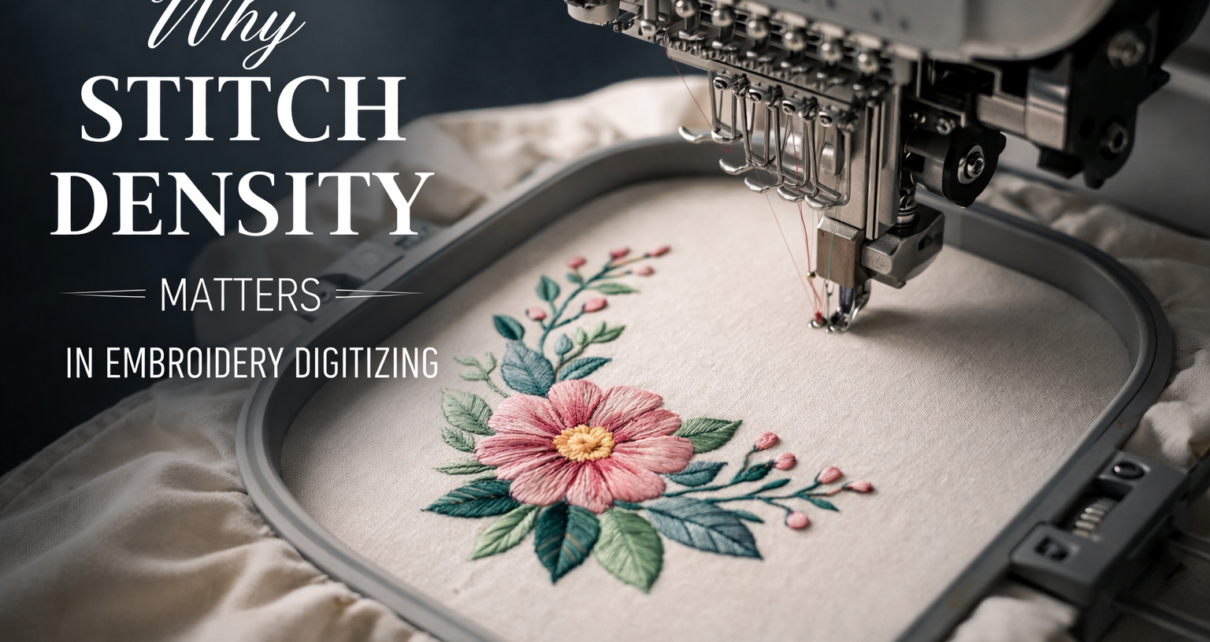
Embroidery quality depends on several technical factors, and one of the most important is stitch density. While many people focus on design or thread color, the spacing between stitches plays a major role in how the final embroidery looks and performs on fabric.
Stitch density in embroidery digitizing refers to how closely stitches are placed within a design. This setting directly affects the appearance, durability, and overall quality of the embroidery. When density is properly balanced, designs appear smooth and consistent. When it is not, the results can include puckering, thread breaks, or uneven stitching.
Understanding stitch density helps businesses and designers avoid common embroidery issues and achieve professional results across different types of garments.
What Is Stitch Density in Embroidery Digitizing
Stitch density refers to the distance between individual stitches in an embroidery design. It determines how much thread is used to cover a specific area of fabric. In digitizing, this setting must be carefully controlled to balance coverage and flexibility.
If stitches are too close together, the design becomes overly dense. This can cause excessive tension on the fabric and lead to stitching problems. If stitches are too far apart, the design may appear thin or incomplete, with visible gaps between threads.
Different stitch types require different density settings. Satin stitches used for text and borders need precise spacing to maintain a clean appearance. Fill stitches used for larger areas require balanced density to ensure even coverage without making the design too heavy.
Because every design is different, stitch density must be adjusted based on size, shape, and material.
How Stitch Density Affects Embroidery Quality
Stitch density has a direct impact on the final appearance of embroidery. Proper density creates smooth surfaces, sharp edges, and consistent coverage across the design.
When density is too high, the design may become stiff and difficult to stitch. Excessive density can cause thread breaks, needle damage, and fabric puckering. These issues not only affect the look of the embroidery but also slow down production.
Low density, on the other hand, can lead to weak and uneven designs. Gaps between stitches reduce coverage and make the embroidery look unfinished. This is especially noticeable in larger filled areas.
Balanced stitch density allows the design to sit naturally on the fabric while maintaining flexibility. It also improves the durability of the embroidery, ensuring that the design holds up well over time.
Factors That Influence Stitch Density
Several factors affect how stitch density should be set during the digitizing process. One of the most important factors is fabric type. Thick fabrics like denim or canvas can handle higher density, while lightweight fabrics require lower density to prevent distortion.
Design size also plays a role. Smaller designs often require tighter control over density to preserve detail, while larger designs need careful spacing to avoid excessive stitching.
Thread type and embroidery machine settings can also influence density decisions. Different threads behave differently under tension, which affects how stitches appear on fabric.
Embroidery machines and needle sizes can also influence how stitch density performs on fabric. Choosing the right needle size for different embroidery applications, including patches and garments plays an important role in maintaining proper thread tension and stitch consistency. Different machines apply tension differently, which can affect how tightly stitches sit on the material. Professional digitizers take these factors into account to ensure consistent results across different production setups.
Because of these variables, stitch density cannot be set using a fixed value. It must be adjusted for each design to achieve the best results.
The Importance of Professional Digitizing
Setting the correct stitch density requires both technical knowledge and practical experience. Professional digitizers understand how to balance density with other elements such as stitch direction and underlay.
They evaluate each design based on fabric type, size, and intended use. This allows them to create stitch files that produce clean and consistent embroidery results.
Businesses that want reliable quality often rely on embroidery digitizing services to ensure proper stitch density and accurate stitch planning before production begins. Professional digitizing reduces errors and helps maintain consistent branding across different garments.
Common Stitch Density Mistakes
One common mistake is using the same density settings for every design. Each design requires custom adjustments based on its structure and material.
Another mistake is increasing density to improve coverage. While this may seem helpful, it often leads to stiff designs and production issues. Reducing density too much can also create gaps and weak embroidery.
Ignoring underlay stitches is another issue. Underlay supports the top stitches and helps stabilize the fabric. Without proper underlay, even well-set density may not produce good results.
Avoiding these mistakes is essential for achieving clean and professional embroidery.
How Stitch Density Is Tested Before Production
Before full production begins, experienced digitizers often run a test stitch to evaluate stitch density on the actual fabric. This step helps identify issues such as puckering, thread breaks, or uneven coverage.
During testing, adjustments can be made to improve stitch spacing and balance. Even small changes in density can significantly affect how the design looks and performs on the garment.
Test stitching ensures that the final embroidery meets quality standards and reduces the risk of production errors.
Conclusion
Stitch density in embroidery digitizing is a critical factor that affects both the appearance and performance of embroidered designs. Proper density ensures smooth stitching, balanced coverage, and long-lasting results.
Incorrect density can lead to visible defects such as puckering, thread breaks, and uneven designs. By understanding how stitch density works and adjusting it based on the design and fabric, better embroidery results can be achieved.
For businesses focused on quality and consistency, paying attention to stitch density is an important step in producing professional embroidery.