
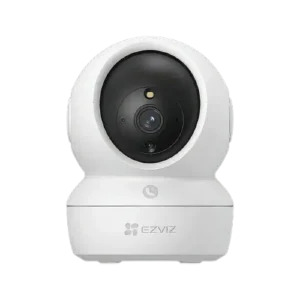
A camera that performs well in a lit driveway or a porch with a streetlight nearby can perform noticeably worse in a genuinely dark alley or an unlit side passage with no ambient light at all. Near-total darkness is a different test than “nighttime” in general, and the specs that matter for it — IR range, lux rating, and lens aperture — aren’t always the ones buyers check first. Here’s what actually determines whether a camera can produce a usable image in a poorly lit area, not just a technically dark one.
Why Dark Alleys Are a Harder Test Than Most Night Vision Marketing Assumes
Most night vision demo footage is shot in conditions with at least some ambient light — a nearby streetlamp, light spilling from a window, reflected city glow. A genuinely dark alley or an unlit boundary passage often has none of that, which means the camera’s own infrared illumination is doing all the work, with nothing to supplement it. This is where the gap between a camera’s advertised night vision range and its real, usable range in true darkness tends to show up most clearly.
Lux Rating: The Spec That Actually Describes Low-Light Ability
A camera’s lux rating measures the minimum amount of light needed for the sensor to produce a usable image before infrared takes over entirely. Lower lux numbers mean the camera can still capture something in dimmer conditions using its regular sensor, before switching to IR mode. A camera rated at 0.01 lux performs meaningfully better in near-dark, ambient-light conditions than one rated at 0.5 lux, since it needs far less available light to function in color or standard mode before falling back on infrared alone.
For a completely unlit alley with genuinely zero ambient light, even an excellent lux rating won’t matter once light drops to nothing — at that point, infrared illumination is what the camera relies on entirely, which is why lux rating and IR range need to be evaluated as two separate factors, not interchangeable ones.
IR Range: What the Advertised Number Doesn’t Tell You
Infrared range, usually listed in metres, describes how far the camera’s built-in IR LEDs can illuminate in total darkness. This number is measured under ideal lab conditions — a clear, open, unobstructed space — which rarely matches a narrow alley with walls close on either side, dust in the air, or a slight bend that limits direct line of sight. In practice, effective IR range in a confined, real-world alley setting often falls short of the advertised distance, sometimes significantly.
A camera advertised with a 30-metre IR range might realistically produce a clearly usable image only within 15 to 20 metres in a real alley, especially if the walls are dark-colored and don’t reflect any IR light toward the lens. When comparing options specifically for a dark, narrow space, it’s worth treating the advertised range as an upper limit rather than an expected result.
Why Narrow, Enclosed Spaces Behave Differently Than Open Areas
Infrared light reflects off nearby surfaces, and in a narrow alley, that reflection can work either for or against image quality depending on the surface. Light-colored or reflective walls close to the camera can actually help by bouncing IR light back into frame, extending effective illumination somewhat. Dark walls, especially rough or matte-textured ones, absorb much of that IR light instead, reducing effective range compared to the same camera mounted in a wider, more open space.
Dust and cobwebs directly in front of the lens — more common in alleys and passageways that don’t get cleaned or checked regularly — also scatter IR light back at the camera itself, sometimes producing a hazy, washed-out image that looks like a fault but is actually just IR light bouncing off something close to the lens.
Color Night Vision vs Pure Infrared for Very Dark Areas
Cameras marketed with “color night vision” use a larger lens aperture and, on many models, a supplementary white light rather than relying purely on infrared. These tend to perform well in areas with some ambient light to work with, but in a completely dark alley with zero ambient light, a supplementary white light effectively becomes the camera’s primary illumination — which changes the situation from passive night vision to something closer to active floodlighting, worth being aware of if a discreet, non-illuminated monitoring approach is preferred.
Pure infrared cameras, which produce a black-and-white image at night rather than color, generally handle true darkness more predictably, since they’re designed around that exact scenario rather than supplementing available light that, in a dark alley, may not exist at all.
Camera Placement for Narrow, Poorly Lit Passages
Mounting position matters more in a confined alley than in an open yard. A camera mounted too high above a narrow passage angles down steeply, which can shorten effective IR range since the beam spreads across a wider vertical area rather than projecting straight down the length of the passage. A camera mounted at a moderate height, angled along the direction of the alley rather than steeply downward, generally makes better use of the IR beam’s full range.
Where an alley has a bend or corner, a single camera can’t cover both segments — a second camera or a wider-coverage unit positioned to catch the turn is usually necessary, since IR light doesn’t bend around corners any more than visible light does.
Should the Camera Be Wireless in This Kind of Location?
Wireless security cameras work well in many outdoor spots, but a dark, narrow alley often sits further from the main house or router than other outdoor mounting points, which can weaken wifi signal exactly where reliable transmission matters most for a poorly lit, higher-risk area. Before choosing wireless for a specific alley or passage, checking actual signal strength at that mounting point — not just assuming coverage based on general property wifi range — avoids ending up with a camera that has good night vision but an unreliable connection back to the recording device or app.
Where signal is confirmed weak, a wired or PoE camera removes that risk entirely, since it doesn’t depend on wifi range reaching into a typically harder-to-cover corner of the property.
When a PTZ Camera Helps in a Long or Irregular Passage
For a longer alley or a passage with more than one turn, a single fixed camera’s IR range and field of view may not cover the full length effectively. A CCTV camera PTZ outdoor unit, mounted at one end with clear line of sight down the passage, can rotate to check different segments and zoom in on anything unusual, extending effective coverage further than a fixed camera’s static IR range would reach on its own. This is a more relevant use case for PTZ than most home settings, precisely because a long, narrow space plays to a PTZ camera’s ability to actively redirect its view rather than being permanently fixed on one segment.
What Actually Drives Night Vision Camera Cost
CCTV camera price in Pakistan for units genuinely built for strong low-light and infrared performance tends to sit higher than standard models advertising night vision as a basic checkbox feature. The cost difference usually reflects real hardware — stronger IR LED arrays, better low-lux sensors, and larger lens apertures — rather than just marketing. For a dark alley or genuinely poorly lit area specifically, spending more for verified IR range and a proven low-lux rating is usually a better use of budget than choosing a cheaper camera on resolution alone, since resolution means little if the image is too dark or too washed out by improperly scattered IR light to make out any detail.
Finding the Best Night Vision Security Camera for a Specific Dark Spot
There’s no single best night vision security camera that suits every poorly lit location equally — a wide, straight alley with light-colored walls has different real requirements than a narrow, bending passage with dark brick on both sides. Checking lux rating and real-world IR range rather than trusting headline numbers, matching camera placement to the passage’s actual shape, and confirming wifi signal strength before choosing wireless over a wired connection are what actually determine whether a camera performs in the specific dark area it’s meant to cover, rather than just in the well-lit conditions most night vision footage is demonstrated in.