
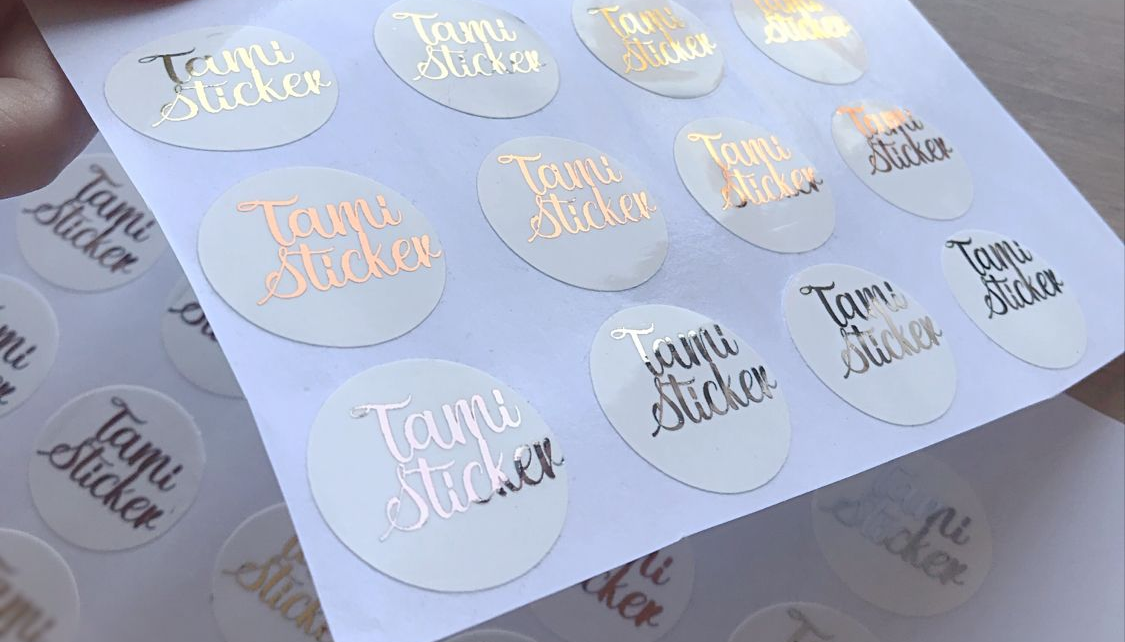
Custom foil stickers are a popular choice for brands that want packaging, labels, and promotional materials to look more refined and noticeable. The metallic finish catches light, adds contrast, and can make even a simple design look more premium.
Businesses use custom foil stickers on product boxes, jars, bottles, envelopes, gift packaging, cosmetics, candles, food containers, and retail products. They are also commonly used for event packaging, luxury branding, limited-edition products, and personalized gifts.
Choosing the right foil sticker material is just as important as selecting the foil color itself. Paper, vinyl, clear film, polyester, and specialty stocks all behave differently. The best choice depends on the product, surface, environment, and expected lifespan of the sticker.
What Are Custom Foil Stickers?
Custom foil stickers are adhesive labels that feature a metallic or reflective foil effect. Gold and silver are the most common choices, but rose gold, copper, holographic, blue, red, and other foil colors are also available.
The foil may be applied using hot foil stamping, cold foil techniques, or digital foil printing depending on the production method.
Traditional foil stamping uses heat and pressure to transfer metallic foil onto a surface. Digital methods can create similar decorative effects without requiring the same type of physical stamping dies.
The result is a sticker that combines printed graphics with a shiny metallic finish.
Why Businesses Use Custom Foil Stickers?
Foil stickers are often selected because they create stronger visual impact than standard printed labels.
Metallic foil reflects light and can draw attention to logos, brand names, borders, icons, or other important parts of a design. For premium products, this can help communicate quality before the customer even opens the packaging.
Custom foil stickers are also flexible from a branding perspective. They can be produced in different shapes, sizes, finishes, and materials.
A business can use a small gold foil logo seal on tissue paper, a larger silver foil label on a cosmetic bottle, or a holographic sticker for a modern retail product.
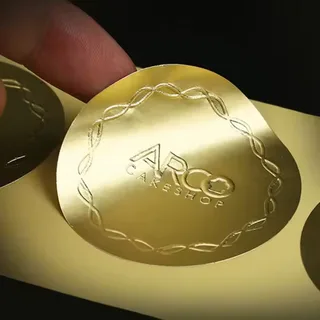
Materials Available for Custom Foil Stickers
The base material determines how a foil sticker looks, feels, and performs. Several options are commonly available.
1. Paper Foil Stickers
Paper is one of the most widely used materials for custom foil stickers.
It offers a clean surface for printing and works particularly well with metallic foil. Paper stickers can be produced with matte, gloss, textured, or uncoated finishes.
They are commonly used for:
- Product boxes
- Gift packaging
- Bakery packaging
- Candle labels
- Clothing boxes
- Stationery
- Envelope seals
Paper foil stickers are generally suitable for dry indoor environments. They are also a good option when the sticker is being applied to cardboard or paper-based packaging.
However, standard paper stickers are not ideal for products that will regularly come into contact with water, oil, or high humidity.
2. Vinyl Foil Stickers
These vinyl is more durable than standard paper and works well for applications where stronger resistance is required.
Vinyl custom foil stickers can handle moisture and general wear better than many paper-based labels. This makes them useful for bottles, jars, reusable containers, promotional products, and some outdoor applications.
Vinyl also works well with die-cut sticker shapes because of its flexibility.
Common uses include:
- Cosmetic containers
- Water bottles
- Retail products
- Promotional stickers
- Glass jars
- Plastic packaging
- Branded accessories
For products that may experience moisture or frequent handling, vinyl is often a better option than paper.
3. Clear Film Stickers
Clear stickers allow the surface underneath the label to remain visible.
When metallic foil is added to transparent material, the result can look particularly modern and premium. For example, a clear sticker with gold foil lettering on a transparent glass jar can create a minimal appearance without covering the product.
Clear foil stickers are commonly used on:
- Glass bottles
- Cosmetic jars
- Candle containers
- Beverage packaging
- Clear plastic boxes
- Premium retail packaging
The quality of the adhesive is important with clear labels because bubbles or cloudy adhesive can affect the finished appearance.
Businesses should also consider whether white ink is required under parts of the artwork to improve contrast.
Read Unveiling the Charm of Custom Kraft Boxes: Your Brand’s Sustainable Packaging Solution
4. Polyester Foil Stickers
Polyester is another durable option for labels that need greater resistance to moisture, tearing, or environmental conditions.
It is commonly used when a sticker needs to stay in place for a longer period.
Polyester can work well for:
- Personal care products
- Bottles
- Electronic products
- Industrial products
- Long-term product labels
- Packaging exposed to moisture
Compared with paper, polyester generally provides better dimensional stability and durability.
For premium branding combined with practical performance, polyester can be an effective choice.
5. Textured and Specialty Paper
Businesses looking for a more tactile appearance can choose specialty paper stocks.
These materials may have natural fibers, linen textures, soft-touch surfaces, or other finishes that give the sticker more character.
Metallic foil often stands out strongly against textured or matte materials because of the contrast between the reflective foil and non-reflective background.
Specialty paper foil stickers are especially suitable for:
- Luxury gift boxes
- Handmade products
- Wedding products
- Premium confectionery
- Boutique cosmetics
- Artisan candles
The main consideration is durability. Most specialty papers are better suited to dry products rather than moisture-heavy environments.
Which Material Is Recommended for Foil Stickers?
There is no single material that is best for every application.
However, the most practical choice usually comes down to paper for premium dry packaging and vinyl or polyester for moisture-resistant applications.
For boxes, envelopes, retail cartons, gift packaging, and other dry surfaces, high-quality coated paper is often the recommended option. It provides excellent print quality, works well with foil, and is usually cost-effective.
For bottles, jars, cosmetics, personal care items, or products exposed to moisture, vinyl or polyester is generally the better choice.
Clear film is recommended when the design needs a “no-label” appearance or when the product itself should remain visible.
Quick Material Comparison
| Material | Best Use | Durability | Recommended For |
|---|---|---|---|
| Paper | Boxes and dry packaging | Medium | Retail, gifts, candles |
| Vinyl | Moisture-prone surfaces | High | Bottles, jars, promotions |
| Clear Film | Transparent packaging | High | Glass and clear containers |
| Polyester | Long-term labels | Very High | Cosmetics and technical products |
| Specialty Paper | Premium presentation | Medium | Luxury and artisan products |
Choosing the Right Foil Color
Material is only one part of the design. The foil color also affects the overall appearance.
Gold foil is often used for luxury products, cosmetics, candles, jewelry, and gifts.
Silver foil has a cleaner and more modern appearance and works well for technology, skincare, beverages, and contemporary branding.
Rose gold and copper can create a warmer appearance, while holographic foil is popular for youth-focused, creative, or high-impact branding.
The foil should complement the background color rather than compete with it.
A dark matte background with gold or silver foil, for example, can create strong contrast and make the metallic details more visible.
Matte vs Gloss Finishes
A finishing layer can further change the look of custom foil stickers.
Matte finishes reduce glare and create a softer appearance. Metallic foil usually stands out strongly against matte backgrounds because the foil remains reflective.
Gloss finishes provide a brighter and more polished appearance. They can also increase the visual intensity of printed colors.
For luxury branding, matte material combined with selective metallic foil is one of the most commonly recommended combinations.
Design Tips for Custom Foil Stickers
Foil is most effective when it highlights specific design elements rather than covering the entire sticker.
Businesses can use foil for:
- Logos
- Brand names
- Borders
- Icons
- Product names
- Decorative patterns
- Limited-edition text
Fine lines and extremely small text should be reviewed carefully before production because some foil processes require minimum line thicknesses.
Keeping the design simple often produces a cleaner foil result.
Final Considerations
Custom foil stickers can improve packaging presentation while helping products stand out in competitive retail environments.
Paper, vinyl, clear film, polyester, and specialty materials all provide different advantages. The right material should be selected according to the surface, product environment, expected durability, and brand style.
For most dry packaging applications, premium coated paper offers an effective balance of appearance, print quality, and cost. For products that may come into contact with moisture, vinyl or polyester is usually the recommended option.
By selecting the right material, foil color, adhesive, and finish, businesses can create custom foil stickers that support both visual branding and practical product labeling.