
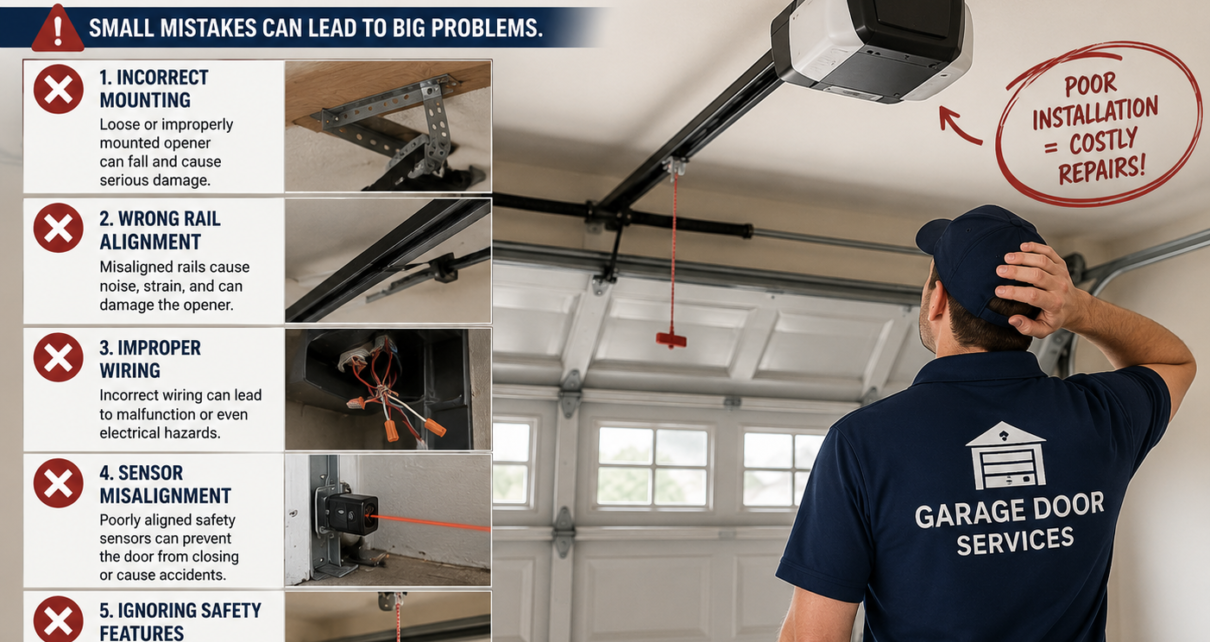
Installing a garage door opener might seem like a straightforward DIY project, but even a small mistake can lead to serious issues. A garage door system is heavy, motor-driven, and safety-sensitive. If the installation is not done correctly, it can affect performance, safety, and long-term durability.
In this guide, we’ll break down what can go wrong when a garage door opener is installed incorrectly, the risks involved, and why professional installation is often the safer choice.
Why Proper Garage Door Opener Installation Matters
A garage door opener is more than just a motor—it is part of a balanced system that includes springs, tracks, cables, sensors, and remote controls. When all components are aligned correctly, the door operates smoothly and safely. Understanding garage door opener installation mistakes is important because even small errors during setup can affect the entire system.
However, incorrect installation can lead to:
- Mechanical failure
- Safety hazards
- Reduced lifespan of the system
- Expensive repairs
Even minor alignment issues can put stress on the entire garage door system.
1. Garage Door May Not Open or Close Properly
One of the most common issues with wrong installation is poor door movement. The opener may struggle to lift the door or may stop midway.
This usually happens due to:
- Incorrect rail alignment
- Improper motor mounting
- Loose chain or belt tension
When this happens, the door becomes unreliable and inconvenient for daily use.
2. Increased Safety Risks
Garage doors are heavy and can cause serious injury if they malfunction.
Improper installation may lead to:
- Door suddenly dropping
- Sensors not detecting obstacles
- Reverse mechanism failure
This is especially dangerous for children and pets who may be near the door when it operates.
3. Excessive Noise and Vibration
A correctly installed garage door opener runs smoothly with minimal noise. If something is wrong, you may hear:
- Grinding sounds
- Loud banging or shaking
- Continuous vibration during operation
This usually indicates misalignment or loose hardware, which can damage internal components over time.
4. Premature Wear and Tear
When a garage door opener is installed incorrectly, it puts extra stress on all parts of the system.
This can cause:
- Worn-out gears inside the motor
- Damaged tracks and rollers
- Broken cables or springs
As a result, the system fails much earlier than expected, leading to costly replacements.
5. Remote and Sensor Malfunctions
Modern garage door systems rely heavily on sensors and remote control programming. Incorrect installation can disrupt this system.
Common issues include:
- Remote not syncing properly
- Sensors not communicating with the motor
- Door not responding consistently
This makes the system frustrating and unreliable.
6. Motor Overheating Problems
If the door is not balanced correctly or the opener is installed under strain, the motor may overwork itself.
This leads to:
- Frequent overheating
- Sudden shutdowns
- Permanent motor damage over time
A burnt-out motor is one of the most expensive repairs in a garage door system.
7. Higher Long-Term Repair Costs
While DIY installation may seem like a way to save money, incorrect setup often results in higher expenses later.
You may end up paying for:
- Realignment services
- Replacement of damaged parts
- Full reinstallation of the system
In many cases, the total cost becomes higher than hiring a professional installer in the first place.
Common Installation Mistakes Homeowners Make
Some of the most frequent errors include:
- Not balancing the garage door before installing the opener
- Incorrect height or positioning of the motor unit
- Skipping safety sensor setup
- Using incorrect tools or hardware
- Not testing the door properly after installation
Even one of these mistakes can affect the entire system.
DIY vs Professional Installation
While DIY installation videos make the process look simple, garage door systems require precision and experience.
DIY Installation:
- Lower upfront cost
- Higher risk of errors
- No warranty protection
Professional Installation:
- Proper alignment and setup
- Safety checks included
- Long-term reliability
- Reduced repair costs
For most homeowners, professional installation is the safer and more cost-effective option.
When You Should Call a Professional
You should contact a technician if you notice:
- Door shaking or moving unevenly
- Opener struggling to lift the door
- Sensor issues or delayed response
- Loud noises during operation
- Door reversing unexpectedly
These are clear signs that something is not installed or calibrated correctly.
Final Thoughts
Installing a garage door opener incorrectly can lead to safety risks, system failure, and expensive repairs. While it may look like a simple task, the precision required makes professional installation the smarter choice.
If you already attempted installation and are facing issues, getting it inspected early can prevent further damage.