
Let’s talk about something every building owner or facility manager down under needs to wrap their head around: safety compliance. If you are a property manager, you must be aware of your legal requirement to maintain safety measures ESM in Australian commercial buildings. Basically, these are the must-have life-safety fixtures, such as emergency lights, exit signs, and fire doors, that contribute to the safety of everyone if something unfortunate occurs. Conducting routine maintenance is not only a checklist activity; it is what ensures that the devices are actually functioning at the time of an emergency. And, compliance with rigorous Australian standards like AS 1851-2012 involves clear instructions on testing these elements, i.e., how and when.
Then, the question is, where does one start? Basically, everything starts with a well-thought-out plan consisting of general visual checks and more in-depth inspections. So, here is a breakdown of your initial baseline inspections:
- Daily Quick Checks: You may ask your team to mark down what simple hazards or unsafe conditions they come across, like fire exits blocked with stuff, broken parts in the machinery, spills, etc., on a daily basis.
- Weekly Walk-Arounds: When your site is busy and/or involves high risks, conducting a 15 to 30-minute walk-through of the site once a week is a great habit. In such a manner, if you find a piece of equipment that may be broken, you will be able to prevent it from turning into a major issue.
- Monthly Audits: If your workspace is relatively quiet and stable, like a standard office building, a thorough monthly check using a solid checklist covers areas that rarely change.
Beyond general walk-arounds, different safety assets have strict testing schedules under the standards. Here is what a typical fire protection system requires to remain compliant:
- Weekly: Fire alarms usually need a quick test every single week to make sure the basics are functioning perfectly.
- Monthly: Firstly, you need to visually inspect the fire extinguishers to make sure the pressure gauge reads in the green zone and that the safety pin has not been taken out. An emergency light will also need a little “flick test” once a month, which means cutting off the power for a second to see if the bulbs are lighting. Besides that, sprinklers and pump sets should not be overlooked and are due for a monthly look too.
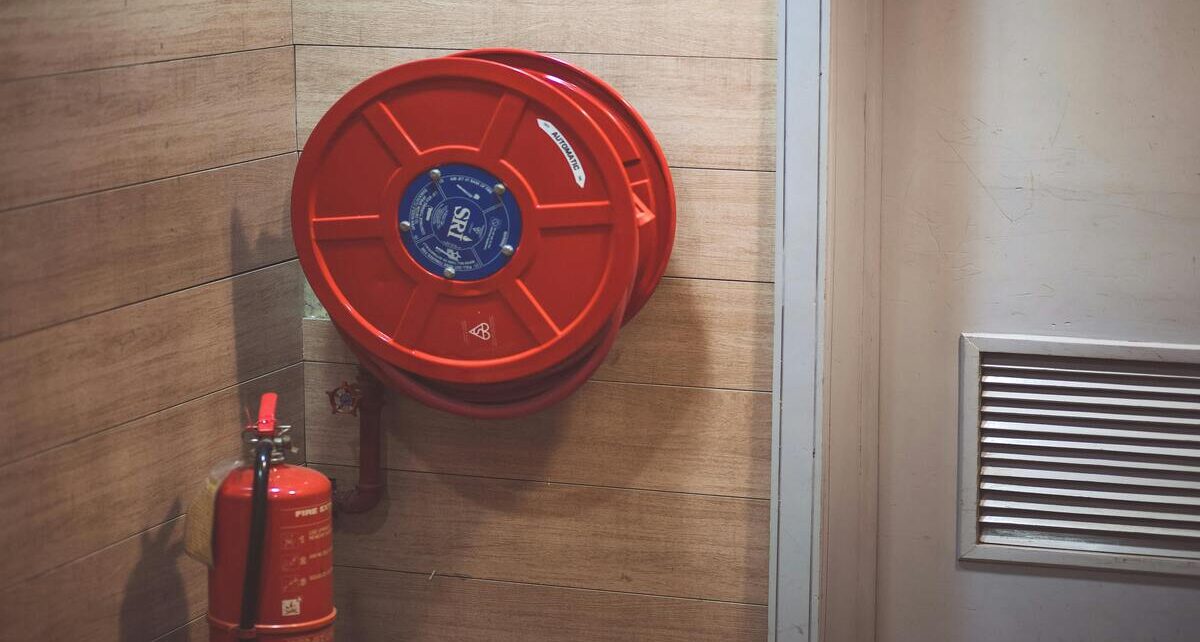
- Six-Monthly: Fire doors need checking to guarantee they can properly block smoke and flames. Extinguishers and hose reels are also carefully reviewed during this period.
- Annually: This is when emergency lighting undergoes a heavy three-hour full-duration test. It is also when you must do System Interface Testing to ensure everything works together properly, like alarms automatically closing doors. Keep in mind, standards have strict timing rules, like a tiny three-day window for monthly checks.
Honestly, plenty of everyday folks mess this up without even realising it. Here are the classic blunders to avoid on your site:
- Incomplete Schedules: A sparky might show up reliably for the quick monthly checks, but the expensive, complex annual routines quietly get ignored.
- The Contractor Gap: Experts generally only look after the specific gear you hired them to fix. That means passive things like paths of travel or fire seals get completely forgotten.
- Defect Neglect: Defects are often logged, but just sit there for months without anyone actually fixing them.
Getting this wrong is going to cost you heavily. If you miss your reporting deadlines, like the Annual Essential Safety Measures Report in Victoria, you are looking at an instant penalty of over four grand. Fines for serious non-compliance can hit up to $400,000 for corporations. Even worse, if you skimp on ESM maintenance and a fire breaks out, your insurance company will likely completely void your building claim because you failed to keep proper records. It really just isn’t worth taking the huge financial gamble on your valuable commercial property.
To avoid all this drama, it is time to move beyond paper logbooks. Old school paper records get lost, ruined, or forgotten in a drawer, and if you can’t hand them over to authorities within 24 hours, you get slapped with another massive fine.
Here is how you can step up your game and stay completely out of trouble:
- Go Digital: Switching to safety observation reporting software gives you real-time alerts, tracks your recurring hazards, and securely backs up your audit trails.
- Get an Independent Review: You should really think about having a fresh pair of eyes to check your contractor’s documentation. An independent auditor ensures that the statement of compliance reflects the reality on the ground.
Conclusion:
At the end of the day, looking after your building effectively means sticking rigidly to the strict Australian standards. Take a good, hard look at your current setup today, move over to a reliable digital tracking system, and always keep your contractors completely accountable so your property stays properly protected against any disastrous event, ensuring long-lasting peace of mind for everyone involved.